
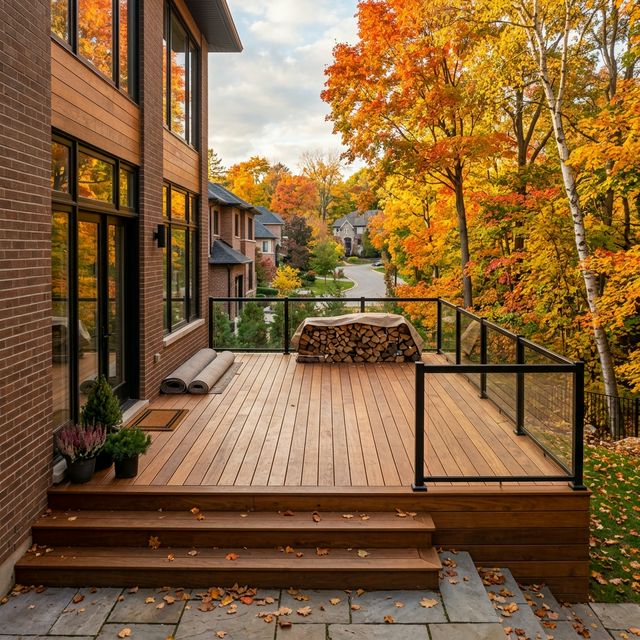
September and October are the most important months of the year for your deck — not summer. Once the leaves start turning in Toronto, you have a narrow window to clean, inspect, and seal your wood surfaces before freeze-thaw cycles begin their damage. Miss this window and you'll be paying for repairs in the spring. Follow this guide and your deck will come out of winter looking exactly like it went in.
Why Fall Is the Critical Window
Most Toronto homeowners think of deck maintenance as a spring project. That instinct is understandable — spring is when you want your deck to look good. But the real opportunity to prevent damage is in the fall, before the damage happens.
Toronto's freeze-thaw cycle is one of the most destructive forces a wood deck will ever face. From November through March, temperatures regularly swing from -15°C overnight to +5°C during the day. Every time moisture inside the wood freezes and thaws, it physically stresses the wood fibers. Over a season, this creates cracks, raised grain, and eventually rot — all of which are expensive to fix.
The solution is simple: go into winter with sealed, protected wood. A properly stained deck resists moisture penetration, meaning the freeze-thaw cycle has nothing to work with. The window to do this right is September through mid-October in the GTA.
Step 1: Clear and Deep Clean
Fall brings leaves, seed pods, and organic debris onto your deck constantly. Don't just sweep — leaves left against or under furniture create moisture traps that breed mold right against your wood surface.
Remove Everything
Move all furniture, planters, BBQs, and rubber mats off the deck completely. This reveals the actual condition of the wood underneath — you may find mold, discolouration, or soft spots that have been hidden all summer. Pay particular attention to corners and areas under furniture where air circulation is poor.
Professional Power Washing
A proper fall cleaning requires more than a garden hose. Professional power washing removes embedded dirt, algae, mildew, and the grey oxidized fibers from the wood surface. This is critical because stain cannot penetrate or properly bond to dirty, contaminated wood.
For cedar and softwood decks, pressure must be carefully calibrated — too high and you'll raise the grain and damage the wood fibers. The correct technique uses a fan tip, appropriate PSI for the wood species, and consistent distance. Cleaning products also matter: a professional wood brightener neutralizes tannins and opens the grain to accept stain evenly.
Dry Completely
After washing, the deck must dry completely before any stain is applied — typically 48 to 72 hours of dry weather in fall conditions. Applying stain over damp wood is the single most common cause of premature peeling and failure. A moisture meter reading below 15% is the professional standard before proceeding.
Step 2: Full Structural Inspection
Fall maintenance is the ideal time for a thorough inspection because the deck is empty, clean, and conditions are calm. Don't skip this step — catching a small issue in October costs far less than repairing it after a winter of freeze-thaw stress.
Check the Decking Boards
Walk every board and press down firmly at multiple points. Any soft or spongy feel indicates rot beginning beneath the surface. Check end grain carefully — the cut ends of boards absorb moisture fastest and rot first. Look for deep cracks running along the grain, heavy splintering, and boards that have started to cup or warp significantly.
Inspect the Structural Frame
Get under the deck if possible and inspect joists, beams, and posts — particularly where they contact the ground or where post bases meet concrete. These are the first places rot develops and the most critical to catch early. Push a screwdriver firmly into each post at and near ground level. Sound wood resists; rotting wood gives way easily.
Check the Ledger Board
The ledger board is where your deck attaches to the house. This is the most critical structural connection on the entire deck. Water infiltration behind the ledger is a slow disaster — by the time you see rot on the surface, the damage is often severe. Look for gaps between the ledger and house siding, missing flashing, and any discolouration suggesting persistent moisture.
Test Railings and Stairs
Push every railing section firmly sideways. Any movement signals a problem — loose post anchors, deteriorated hardware, or rotted post bases. Test stair stringers by pressing down on each stair tread at the attachment points. Stairs take enormous seasonal stress from ice and foot traffic with ice cleats, and failures here are a safety hazard.
Step 3: Repairs Before Sealing
Any repairs must happen before staining — not after. Staining over damaged wood seals in problems rather than solving them.
Board Replacement
Boards that are soft, heavily cracked, or cupped beyond normal should be replaced. In most cases, a few boards can be swapped out during a maintenance visit without affecting the rest of the deck. Match species and dimensions carefully — using the wrong lumber leads to differential movement and moisture issues at the seams.
Fastener Tightening and Replacement
Go over every visible screw and check for loose fasteners, raised screw heads, and popped nails. Raised fasteners create trip hazards and allow water entry points. Replace any corroded fasteners with stainless steel or hot-dipped galvanized hardware — the GTA's freeze-thaw and road salt environment corrodes standard screws quickly.
Railing Reinforcement
Wobbly posts can often be reinforced by adding appropriate hardware at the base rather than full replacement. This is significantly less expensive and structurally sound when done correctly.
Step 4: Stain or Seal for Winter
This is the most important step. A proper fall stain application is your deck's primary defence against six months of Toronto winter.
Choosing the Right Product
Not all deck stains are equal, and the wrong product choice for fall application is a costly mistake. For fall in the GTA, you want:
- Oil-based or modified oil stains for deep penetration into dry fall wood
- A formula with UV blockers — even in winter, UV damage continues on south-facing decks
- Mildewcide additives — critical for shaded Toronto lots where snow sits longest
- A product rated for application above 10°C — water-based stains can fail to cure properly in cool fall temperatures
Semi-Transparent vs. Solid Stains for Winter
Semi-transparent stains penetrate the wood and show the natural grain. They offer excellent protection but require more frequent reapplication. Solid stains form a thicker film on the surface and provide maximum moisture and UV protection — better suited for older, heavily weathered decks going into a harsh winter. The right choice depends on your wood species, current condition, and how recently it was last stained.
Application Temperature and Conditions
Apply only when temperatures are above 10°C and rising, with no rain forecast for 48 hours minimum. In Toronto, this typically means September and early October. Evening cooling in October can cause dew to form on freshly applied stain before it cures — plan applications for morning starts so the warmest part of the day helps the stain penetrate and set.
Step 5: Furniture and Accessories Storage
Once the deck is treated, storing furniture properly protects your investment and makes spring setup effortless.
What to Store Indoors
Cushions and fabric — always. Teak and cedar furniture can stay outside with breathable covers. Metal furniture handles Toronto winters well but will eventually corrode if left wet. Resin and plastic furniture can crack in extreme cold — storing them inside extends their life significantly.
What to Do With Planters
Terracotta pots crack when water inside freezes. Bring them in or empty them completely. Heavy planters left on the deck all winter create moisture traps and can leave permanent staining on freshly stained wood — use furniture feet or move them to the lawn.
BBQ and Grill Care
Cover BBQs with breathable, water-resistant covers. A proper BBQ cover keeps rain and snow out while allowing condensation to escape — preventing rust. Never cover a BBQ with a tarp, which traps moisture and accelerates corrosion.
Timing It Right for Toronto's Climate
The GTA's fall weather creates a specific and predictable window for deck maintenance. Here's how to plan:
- September: Ideal. Temperatures still reliable, wood has dried from summer, plenty of warm days for stain application. This is the target window.
- Early October: Still viable. Watch overnight temperatures — once they regularly drop below 5°C, stain application becomes risky.
- Mid-to-Late October: Marginal. Cleaning and inspection are fine, but staining requires careful weather monitoring. Some years this window is open; many years it isn't.
- November onward: Too late for staining. Focus on securing furniture and planning spring restoration.
The practical advice: book your fall maintenance in August or early September. Professional crews fill up fast in fall — the homeowners who call in late September find October appointment slots already gone. Don't wait until your deck looks bad to act.
Beaver Wood Restoration serves Toronto, Vaughan, Mississauga, Markham, Richmond Hill, Oakville, Brampton, Aurora, and King City. Contact us for a free fall maintenance quote and we'll assess your deck's specific needs before the window closes.
Is It Too Late to Stain This Year?
This is the question we field most often from late August onward, and the honest answer is that it depends on overnight lows rather than the date on the calendar. A finish needs the surface to stay within its working temperature range through the entire curing period — not merely at the moment it is applied. A warm October afternoon followed by a near-freezing night is a poor day to coat, however pleasant it felt at noon.
| Conditions | Verdict | What to do |
|---|---|---|
| Daytime highs comfortably above 10°C, overnight lows staying above freezing, dry stretch ahead | Go | Book it — this is a normal working window |
| Warm days but overnight lows near or below freezing | Risky | Cure is compromised; wait or accept a shortened finish life |
| Wood still damp, or rain within 48 hours either side | No | Moisture-test first; staining damp wood guarantees failure |
| Consistent overnight frost | Season closed | Clean and repair now; stain first thing in spring |
If you have run out of season, the productive move is not to force a coat on. It is to do the parts that still help: clear the debris, clean the surface, make repairs, and get the deck into winter dry and structurally sound. A clean deck that goes unstained through one winter is in far better shape come spring than a deck carrying a coat that never cured. Our guide to timing and temperature in the GTA covers the full weather picture, and road salt damage on decks and stairs covers protecting the stairs you will still be using all winter.
One more reason not to rush a late coat: unprotected wood greys and checks over winter, but a badly cured coat has to be stripped before anything can go on top of it in spring. That turns a straightforward deck staining job into refinishing. We provide free on-site assessments and will tell you plainly if the honest answer is to wait until spring.
Frequently Asked Questions
Is it too late to stain my deck in the fall in Toronto?
As long as daytime temperatures are consistently above 10°C and no rain is forecast for 48 hours, staining in fall is perfectly viable in Toronto. September and early October are often ideal — the wood is dry from summer and temperatures are still cooperative. Once overnight temperatures drop below 5°C regularly, it's too late for stain application and you should wait until spring.
Should I cover my deck with a tarp for winter in Toronto?
No — covering a wood deck with a tarp traps moisture underneath, which accelerates mold growth and wood rot. Properly sealed wood breathes naturally and handles Toronto winters far better uncovered. If you have furniture you can't store indoors, use breathable furniture covers specifically designed for outdoor use.
What happens if I skip fall deck maintenance?
Water penetrates unprotected wood through checks and grain openings. When that moisture freezes, it expands roughly 9% — physically splitting wood fibers from the inside. After one or two Toronto winters without protection, you'll see raised grain, deep cracks, soft rot spots, and significant greying. These issues are repairable but cost significantly more to fix than a simple fall maintenance visit.
Can I do fall deck maintenance myself or should I hire a professional?
Basic cleaning you can handle yourself with a rented power washer and deck cleaner. However, the inspection, repairs, and stain application stages are where DIY mistakes become expensive. Applying stain over wet wood, using the wrong product, or missing early rot are common errors that lead to premature failure. For a thorough job that lasts, professional service is the smarter investment.
How much does fall deck maintenance cost in Toronto?
A professional fall maintenance visit — including power washing, inspection, minor repairs, and stain application — typically ranges from $400 to $1,800 depending on deck size and condition. This is a fraction of what spring repairs cost after a winter of unprotected wood exposure. Contact us for a free quote specific to your deck.
Get Your Free Quote
Tell us about your project — we get back within 1 business day with honest pricing.