
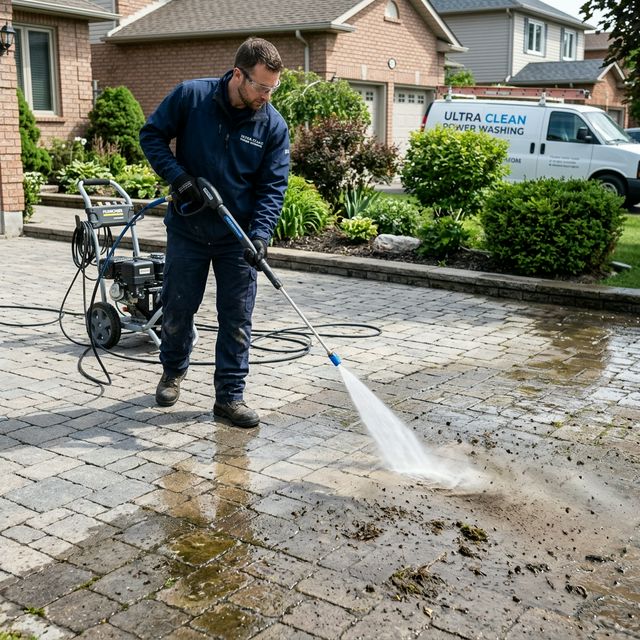
Ask ten Toronto homeowners what the difference is between pressure washing and power washing and most will say there isn't one. They're wrong — and the distinction matters significantly when it comes to choosing the right treatment for wood decks, driveways, fences, and other exterior surfaces. Using the wrong method on the wrong surface causes permanent damage. This guide breaks down exactly what each process is, when each is appropriate, and what Toronto and GTA homeowners should be asking for when they contact a restoration company.
The Core Difference
Here it is simply: power washing uses heated water, pressure washing uses cold water. Both use high-pressure water delivery. The temperature difference is the distinction — and it determines which surfaces and contaminants each method handles best.
In practice, most residential cleaning companies in Toronto use the terms interchangeably in their marketing — including us, because that's what most customers search for. But when you're choosing a service and asking about technique, the distinction matters. Let's break both down.
What Is Pressure Washing?
Pressure washing uses cold water delivered at high pressure — typically between 1,500 and 4,000 PSI depending on the application and equipment. The mechanical force of the water dislodges dirt, mold, mildew, and organic growth from surfaces.
How PSI Works
PSI (pounds per square inch) measures the water force. Higher PSI means more aggressive cleaning — and more potential for surface damage if misapplied. Professional operators select PSI based on the surface:
- 500–800 PSI: Cedar and softwood decks, painted surfaces, stucco
- 1,000–1,500 PSI: Composite decking, hardwood decks, vinyl siding
- 2,000–3,000 PSI: Concrete driveways, brick, stone, interlock
- 3,000+ PSI: Heavy-duty industrial applications — not residential surfaces
When Pressure Washing Is the Right Choice
Pressure washing is the appropriate method for most residential exterior cleaning in Toronto: wood and composite decks, fences, siding, patios, and general surface maintenance. The cold water is effective for removing loose dirt, biological growth, and old surface coatings when combined with appropriate cleaning solutions.
What Is Power Washing?
Power washing adds heat — water is typically delivered at 60°C to 95°C along with high pressure. The combination of heat and pressure makes power washing significantly more effective at removing specific types of stubborn contaminants that cold pressure washing struggles with.
What Heat Adds
Hot water cleaning works on the same principle as hot vs. cold water when washing dishes. Heat breaks the surface tension of grease and oil, dissolves wax and chemical residues, and kills certain biological matter more effectively than cold water. For specific applications, this makes a significant difference.
Best Applications for Power Washing in the GTA
- Oil and grease stains on driveways: Automotive oil, cooking grease, and hydraulic fluid bond to concrete at a molecular level. Hot water power washing literally boils these compounds out of the concrete pores in a way cold pressure washing cannot match.
- Commercial kitchen exteriors and restaurant areas: Grease buildup on commercial surfaces requires the degreasing power of hot water.
- Heavy industrial equipment: Machinery, vehicles, and equipment with heavy grease and chemical contamination.
- Heavily contaminated driveways near food service or automotive operations.
When Not to Use Power Washing
The heat that makes power washing effective on grease makes it destructive on many residential surfaces. Hot water should not be used on:
- Wood decks and fences — heat opens wood fibers aggressively and can cause rapid moisture loss, warping, and checking
- Composite decking — heat can soften and deform composite materials
- Vinyl siding — heat warps and discolours vinyl
- Painted surfaces — heat accelerates paint loosening and peeling
- Older brick and stone — thermal stress can crack mortar and damage the material
What Is Soft Washing?
There's a third method that's increasingly important for Toronto homeowners to know: soft washing. Soft washing uses very low pressure — typically under 500 PSI, closer to a garden hose — combined with specialized chemical solutions to do the cleaning work.
How Soft Washing Works
Rather than blasting contaminants off with mechanical force, soft washing applies biodegradable cleaning solutions — algaecides, mildewcides, surfactants — that chemically dissolve and kill organic growth at the root. The low-pressure rinse simply removes the dead material after the chemistry has done its work.
When Soft Washing Is the Right Choice
- Cedar and softwood surfaces: Essential for cedar decks, shingles, and fences where high pressure causes damage
- Cedar roof cleaning: The City of Toronto prohibits high-pressure washing on roofs — soft washing is the compliant and correct method
- Older or delicate materials: Aged brick, hand-painted surfaces, ornamental wood details
- Algae and mildew treatment: Soft washing kills organic growth at the root rather than just removing surface matter — the growth returns much more slowly than after pressure washing
Which Method for Which Surface?
Here's a practical guide to method selection for the most common Toronto exterior surfaces:
- Cedar deck: Low-pressure washing (500–800 PSI) with wood cleaner + brightener. Never high pressure, never hot water.
- Pressure-treated or composite deck: Medium pressure (1,000–1,500 PSI) cold water with appropriate cleaning solution.
- Cedar fence: Soft washing or low-pressure washing with wood cleaner. High pressure destroys cedar fence boards.
- Concrete driveway (general dirt): Cold pressure washing at 2,000–3,000 PSI with concrete cleaner.
- Concrete driveway (oil stains): Hot water power washing with degreaser for best oil removal results.
- Interlock driveway: Cold pressure washing at controlled 1,500–2,000 PSI with fan tip, followed by polymeric sand replenishment.
- Vinyl siding: Low-pressure cold washing (under 1,500 PSI) with siding cleaner. Never hot water.
- Brick exterior: Medium-pressure cold washing. Age and mortar condition determines maximum safe PSI.
- Cedar roof: Soft washing only. No high pressure under any circumstances.
Special Consideration: Wood Decks
Because the majority of calls we handle in Toronto involve wood deck cleaning, it's worth spending extra time on why technique matters so much here.
The Grain Damage Problem
Wood is a directional material — the grain runs the length of the board, and the fibers are aligned in that direction. When high-pressure water hits wood across the grain, it acts like a chisel — physically lifting and separating fibers. This creates a rough, fuzzy surface called "raised grain" that:
- Absorbs stain unevenly, creating a blotchy, unprofessional finish
- Holds moisture more effectively, accelerating rot
- Creates permanent surface damage that requires sanding to fix
- Makes the deck surface more prone to splinters
The Right Technique
Professional deck cleaning uses:
- Calibrated pressure appropriate to the wood species (lower for cedar, slightly higher for hardwoods)
- A 25 or 40-degree fan tip — never a zero-degree pencil tip on wood
- Consistent distance maintained throughout — typically 30 to 45cm
- Motion always with the grain, never across it
- Wood-specific cleaning solutions to do the chemical work, reducing mechanical pressure needed
- A wood brightener application after cleaning to neutralize tannins and open grain for staining
DIY vs. Professional in Toronto
Consumer-grade pressure washers rented from Home Depot or Canadian Tire run 1,600 to 2,300 PSI with limited nozzle options. For driveways and concrete, this is often adequate. For wood surfaces, it's borderline — at the upper end without proper technique, you can cause real damage.
Where DIY Makes Sense
- Concrete driveways without significant oil staining
- Brick and stone patios in good condition
- Vinyl siding on newer homes
- General property cleanup where surface damage risk is low
Where Professional Service Is Worth It
- Any wood surface — cedar decks, cedar fences, softwood structures
- Cedar roofs (professional soft washing required)
- Surfaces being prepared for staining or sealing — surface quality directly affects stain adhesion and longevity
- Older or delicate materials where damage risk is high
- Interlock driveways where joint integrity needs to be preserved
The calculation is simple: professional cleaning for a cedar deck costs $150 to $350. Repairing raised grain damage and reflowing a failed stain costs considerably more. For surfaces where technique matters, professional service pays for itself.
Beaver Wood Restoration provides professional power washing, deck cleaning, fence washing, and driveway cleaning across Toronto, Vaughan, Mississauga, Markham, Richmond Hill, Oakville, Brampton, Aurora, and King City. Get a free quote for your exterior cleaning project.
Side-by-Side: Pressure vs Power vs Soft Washing
The three terms get used interchangeably in advertising, but they describe genuinely different processes with different correct uses. The short version: pressure washing is unheated high pressure, power washing adds heat, and soft washing replaces pressure with chemistry.
| Pressure washing | Power washing | Soft washing | |
|---|---|---|---|
| Water temperature | Unheated | Heated | Unheated |
| Working pressure | High | High | Low — near garden-hose |
| Does the work | Mechanical force | Force plus heat | Cleaning solution and dwell time |
| Best for | Concrete, brick, hard masonry | Grease, oil, gum on hard surfaces | Cedar roofs, siding, soft or aged wood |
| Wrong on | Cedar, aged softwood, shingles | Anything that can scorch or delaminate | Heavy oil staining on concrete |
| Risk if misapplied | Gouged, furred grain; driven-in water | Surface damage plus heat damage | Minimal to the surface; slower on hard stains |
For wood, the practical rule is that pressure is the last tool you should reach for, not the first. Chemistry does the work on organic growth, and pressure is only there to rinse it away — which is why a cedar roof gets soft washed rather than blasted. We explain that distinction in detail in power washing versus soft washing for cedar roofs.
Cleaning is also the step that determines whether a finish will bond at all: stain applied over a surface still carrying algae, grey oxidation, or mill glaze fails within a season regardless of product quality. Our power washing and deck cleaning services calibrate pressure and chemistry per surface and finish with a pH-neutralizing rinse so the wood is ready for staining. Cleaning-only work carries a 30-day satisfaction guarantee.
Frequently Asked Questions
Is pressure washing or power washing better for a wood deck in Toronto?
Neither at full force — wood decks should be cleaned with controlled low-to-medium pressure (500 to 800 PSI) using a fan tip nozzle, which is technically pressure washing. However, professional deck cleaning also incorporates specialized wood cleaning solutions and brighteners that do the real work chemically, reducing the amount of mechanical pressure needed. High-pressure power washing on wood raises the grain, damages fibers, and creates a fuzzy surface that holds stain unevenly.
How much does pressure washing or power washing cost in Toronto?
Driveway pressure washing in Toronto typically runs $150 to $400 depending on size. Deck washing as a standalone service runs $150 to $350. Full exterior house washing varies widely by square footage. These prices reflect professional service with commercial equipment — rental equipment and DIY approaches often produce inconsistent results and can cause surface damage on delicate materials.
Can I pressure wash my own deck in Toronto?
You can, but there's real risk of damage without experience. The most common DIY mistakes on Toronto decks: pressure too high for the wood species, wrong nozzle angle causing raised grain and permanent fuzzing, washing too close to the surface, and washing across the grain rather than with it. Cedar and softwood decks are particularly vulnerable. If you rent equipment, use a 25-degree fan tip, stay above 30cm from the surface, and always work with the grain.
Will power washing damage my interlock driveway?
High-pressure washing can displace the polymeric sand between interlock stones if the nozzle is held too close or the angle is wrong. Professional interlock washing uses controlled pressure and technique to clean the stone surfaces without washing out the joints. After washing, blown-out joints should be re-sanded with polymeric sand to prevent weed infiltration and stone movement.
How often should I pressure wash my deck and driveway in Toronto?
Decks benefit from a thorough cleaning once per year — ideally in fall before winter protection or in spring before staining. Driveways in the GTA accumulate road salt, oil, and organic growth and benefit from cleaning every 1 to 2 years depending on shade exposure and traffic. Shaded driveways with algae and moss growth may need annual attention to stay safe and presentable.
Get Your Free Quote
Tell us about your project — we get back within 1 business day with honest pricing.