
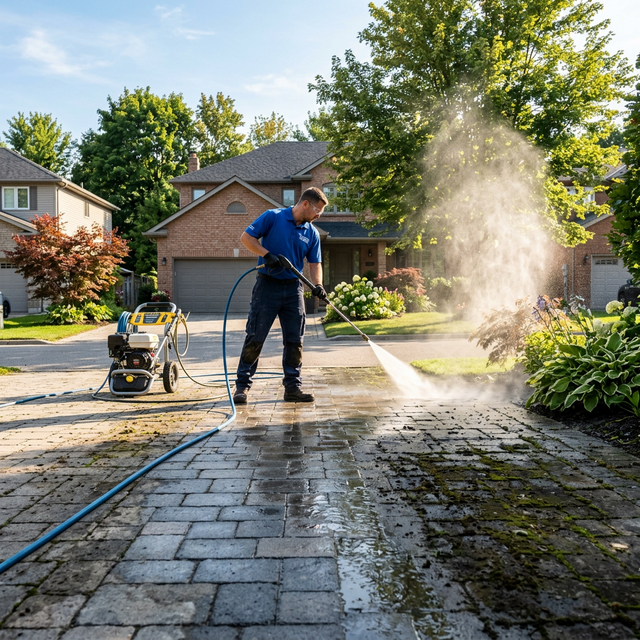
Your driveway is often the first thing guests and potential buyers notice about your home. Years of oil drips, tire rubber, moss, algae, and winter salt leave a lasting impression — and not a good one. Professional driveway power washing removes all of it, often in a single day, dramatically boosting curb appeal. This guide covers everything homeowners in Mississauga, Brampton, Vaughan, and across the GTA need to know.
Driveway Types and Pressure Requirements
Not all driveways are the same, and pressure settings should be calibrated to the surface type. Using too much pressure on the wrong surface causes permanent etching or joint damage that is costly to repair.
Concrete Driveways
Standard residential concrete handles 2,000–3,000 PSI effectively. This is enough to strip away algae, tire marks, and surface staining without harming the concrete. For older or more delicate concrete, start at the lower end and increase as needed. Always use a 25–40 degree fan nozzle — never the 0-degree red tip.
Asphalt Driveways
Asphalt is softer than concrete and requires more careful handling — typically 1,500–2,000 PSI with a wider 40-degree nozzle. Hot summer asphalt is particularly vulnerable to high-pressure damage. Chemical cleaners do more of the heavy lifting on asphalt, with pressure simply rinsing.
Interlock/Paving Stone Driveways
Interlock requires the most careful approach. High pressure dislodges polymeric sand from between the stones, destabilizing the surface. Professional cleaning uses 1,000–1,500 PSI with wide fan nozzles, careful technique, and post-wash sand replenishment to maintain the integrity of the installation.
Common Driveway Stains and How to Remove Them
Different stains require different treatments. Understanding what you're dealing with helps you set realistic expectations and choose the right approach.
Oil and Grease Stains
The most common driveway stain across the GTA. Fresh oil (less than a week old) responds well to direct degreaser application followed by hot-water pressure washing. Older, penetrated stains benefit from repeated degreaser applications and may require a specialized oil-encapsulating product. Very old black stains may require grinding for complete removal.
Tire Marks
The black rubber streaks from hard braking are a form of rubber deposit, not a stain penetrating the concrete. High-pressure washing with a concrete cleaner removes most marks effectively. Aggressive circular scrubbing with a rotary surface cleaner attachment gives the best results.
Algae, Moss, and Organic Growth
Common in shaded GTA driveways that don't dry quickly. Algae makes concrete dangerously slippery. Treatment with a sodium hypochlorite or oxygen bleach solution before washing releases the organic matter, which pressure washing then removes completely. One treatment usually eliminates growth for 1–3 years.
Efflorescence (White Salt Deposits)
White, chalky deposits common in new concrete and interlock, caused by salt minerals migrating to the surface. Acid-based cleaners neutralize and release efflorescence effectively. Once removed, sealing helps prevent recurrence.
Special Care for Interlock Driveways
Interlock is beautiful when well-maintained but requires specific care to preserve the stability and appearance of the installation.
Pre-Washing Preparation
Inspect the interlock for loose or settled stones before washing. Address any sunken sections first — washing over structural issues won't fix them and may worsen the situation.
Weed and Moss Removal
Apply a weed and moss killer to joints a week before scheduled washing. This loosens roots and makes removal during washing much more complete. Manual removal of larger weeds before washing saves chemical product and improves results.
Post-Wash Sand Replenishment
Power washing always removes some polymeric sand from joints. After washing and complete drying, sweep fresh polymeric sand across the surface and compact it into joints. A light mist to activate the polymeric binder completes the process. This step is critical — skipping it leaves joints vulnerable to weed growth and stone movement.
After-Washing Care and Sealing
Power washing is an excellent opportunity to assess and improve your driveway's long-term durability. While the surface is already clean, consider these follow-up treatments.
Driveway Sealing
Concrete sealers penetrate the surface to block staining agents, repel water, and protect against the freeze-thaw cycle that cracks concrete over time. For concrete driveways, re-sealing every 2–3 years significantly extends the driveway's life and keeps it looking newer for longer. For interlock, sealing is equally valuable — it locks in the sand and creates a low-sheen protective surface.
How Often Should You Wash?
For most Toronto and GTA homeowners, professional driveway power washing once per year is the ideal cadence. Annual cleaning before sealing application maintains protection and prevents the buildup of materials that are harder to remove over time. Driveways with heavy vehicle traffic, large overhanging trees, or significant shading may benefit from twice-yearly cleaning to prevent organic growth from taking hold. Contact Beaver Wood Restoration for a free driveway assessment and quote.
Frequently Asked Questions
Can power washing damage my concrete driveway?
Using the correct pressure and technique, power washing is completely safe for concrete. The risk is from improper technique — too high pressure or holding the nozzle too close can etch the surface. Professional equipment with adjustable pressure eliminates this risk.
Will power washing remove old oil stains completely?
Heavy, set-in oil stains may require pre-treatment with a degreaser before washing. Fresh oil releases more completely than old stains. Very old stains may lighten significantly but not disappear 100% without surface treatment.
Should I seal my interlock driveway after power washing?
Yes. Sealing interlock after cleaning helps lock in the polymeric sand between stones, prevents weed growth, and protects against future staining. It is one of the best investments for long-term interlock maintenance.
How long after power washing can I use my driveway?
Concrete driveways can typically be used the same day once the surface has dried. If sealer is applied, wait the full curing time specified on the product label — usually 24–48 hours.
Get Your Free Quote
Tell us about your project — we get back within 1 business day with honest pricing.