
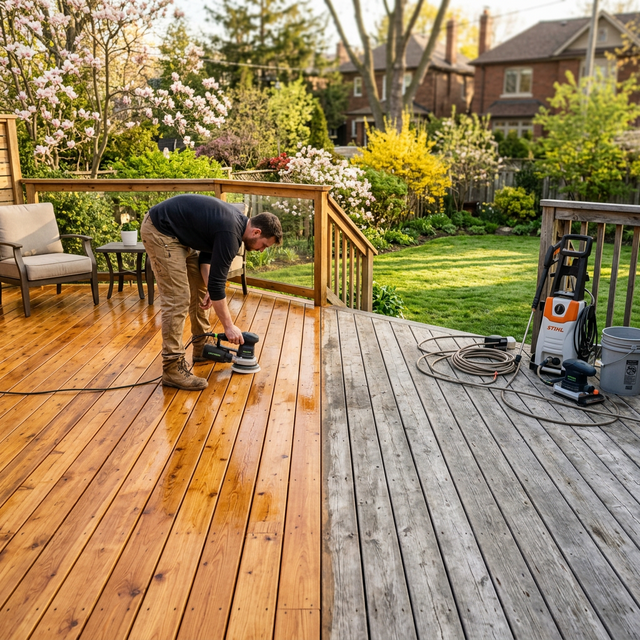
After months of freeze-thaw cycles, salt, and snow, Toronto decks need careful assessment and preparation before the warm season begins. This comprehensive spring checklist walks you through every step — from inspection to the first coat of stain — so you can get back to enjoying your outdoor space as fast as possible.
Winter Damage Assessment
Before doing anything else, walk every inch of your deck and take stock of winter's impact. Toronto's harsh freeze-thaw cycle is particularly damaging because water expands roughly 9% when it freezes, stressing wood cells from the inside out.
What to Look For
- Splintering and raised grain: Surface fibers lifting are a classic post-winter sign. Sanding is required before refinishing.
- Grey discolouration: Oxidized grey wood means the UV-protective oils have depleted. Brightening and restaining will restore the colour.
- Soft or spongy boards: Press firmly with your thumb on deck boards, especially near posts and ledger boards. Soft spots indicate rot.
- Cracking at fastener points: Boards cracking around screws and nails may need replacing to prevent further splitting.
- Railing wobble: Push each section of railing firmly. Movement that wasn't there last fall signals damaged post anchors or deteriorated footings.
Spring Cleaning Steps
Cleaning is the foundation of a successful deck restoration. No amount of premium stain compensates for a dirty or wet surface underneath.
Step 1: Clear the Deck
Remove all furniture, planters, BBQs, and mats. These often hide the worst winter damage — and you may be surprised by what's underneath. Check for mildew under rubber mats and planters.
Step 2: Leaf Blower and Dry Sweep
Clear all debris from the surface and between boards. Wet, compacted leaves hold moisture against wood all winter and create conditions for mold growth.
Step 3: Oxygen Bleach Treatment (If Needed)
For heavy mildew, mix a quality oxygen bleach cleaner with water and apply with a pump sprayer. Allow 15–20 minutes of contact time, then scrub with a stiff brush. Oxygen bleach is plant-safe and won't damage your lawn or garden.
Step 4: Professional Power Washing
Using 600–1000 PSI (depending on wood type), clean in the direction of the grain with smooth overlapping strokes. This removes grey fiber, embedded dirt, and any remaining mildew. After washing, allow 48–72 hours of good drying time before any finishing work begins.
Repairs Before Staining
Attempting to stain over damaged boards is a waste of time and money. Address these issues first:
Replace Rotted Boards
Boards with rot don't hold stain and continue to deteriorate even after finishing. Match replacement boards to the same species as your existing deck for the most uniform appearance.
Re-fasten Loose Boards
Use stainless steel or hot-dipped galvanized screws — never regular iron nails that will rust and stain the wood. Pre-drill to avoid splitting older, drier wood.
Sand the Raised Grain
Power washing raises wood grain, creating a fuzzy texture that stain will absorb unevenly. Sand the entire deck surface with 80-grit to smooth it down before applying any finish.
Best Stains for Spring in Toronto
Choosing the right product makes a significant difference in how long your spring staining job lasts through another Canadian winter.
Oil-Based Penetrating Stains
For cedar and pressure-treated pine decks, penetrating oil-based stains seep deep into wood cells rather than forming a surface film. This means they don't peel — they simply fade gradually, making maintenance much simpler. Premium contractor-grade non-drying penetrating oils are the popular professional choice for these conditions.
Water-Based Semi-Transparent Stains
Modern water-based formulas have dramatically improved and now rival oil-based performance in many conditions. They dry faster (important for our variable spring weather), have lower VOC emissions, and clean up with water. Many GTA professionals now default to premium water-based products.
Solid Stains for Weathered Decks
If your deck has significant graying, discoloration, or minor imperfections you want to cover, a solid stain hides the wood grain completely while providing maximum UV and moisture protection. Best suited for older decks that wouldn't photograph well with a clear finish.
Hiring a Pro vs. DIY
Spring is the busiest season for deck restoration in Toronto. Here's an honest look at both options:
DIY Spring Deck Staining
If you have a small, simple deck in good condition, confident DIY skills, and the right equipment (or rental access), DIY can be rewarding. Budget at least a full weekend plus drying time in between steps. The biggest risk: rushing the drying or cleaning steps.
Professional Services
For decks with meaningful damage, complex railings, multiple levels, or if you simply value your time, professional service is the better investment. A trained crew completes in one to three days what might take a homeowner a full week — with better equipment, premium products, and guaranteed results. Beaver Wood Restoration offers free spring assessments across the GTA. Contact us to book your spot before the season fills up.
Frequently Asked Questions
When is the best time to stain a deck in Toronto in spring?
Late May through early June is ideal. Temperatures should consistently be above 10°C with no rain forecast for at least 48 hours. Earlier in spring often means too much moisture in the wood from winter snowmelt.
How do I tell if winter damaged my deck boards?
Look for splintering, dark grey patches, cracks running along the grain, and soft spots when you press down. These are signs of moisture damage and freeze-thaw deterioration that need to be addressed before staining.
Can I stain my deck without power washing first?
No. Skipping power washing means staining over dirt, mold, and loose fibers — which causes premature peeling and poor adhesion. A thorough wash and dry is non-negotiable for lasting results.
How long does a full spring deck restoration take?
For a typical residential Toronto deck, a professional crew completes power washing, sanding, and staining in 1–3 days depending on size and condition. Drying time between stages is the main variable.
Get Your Free Quote
Tell us about your project — we get back within 1 business day with honest pricing.