
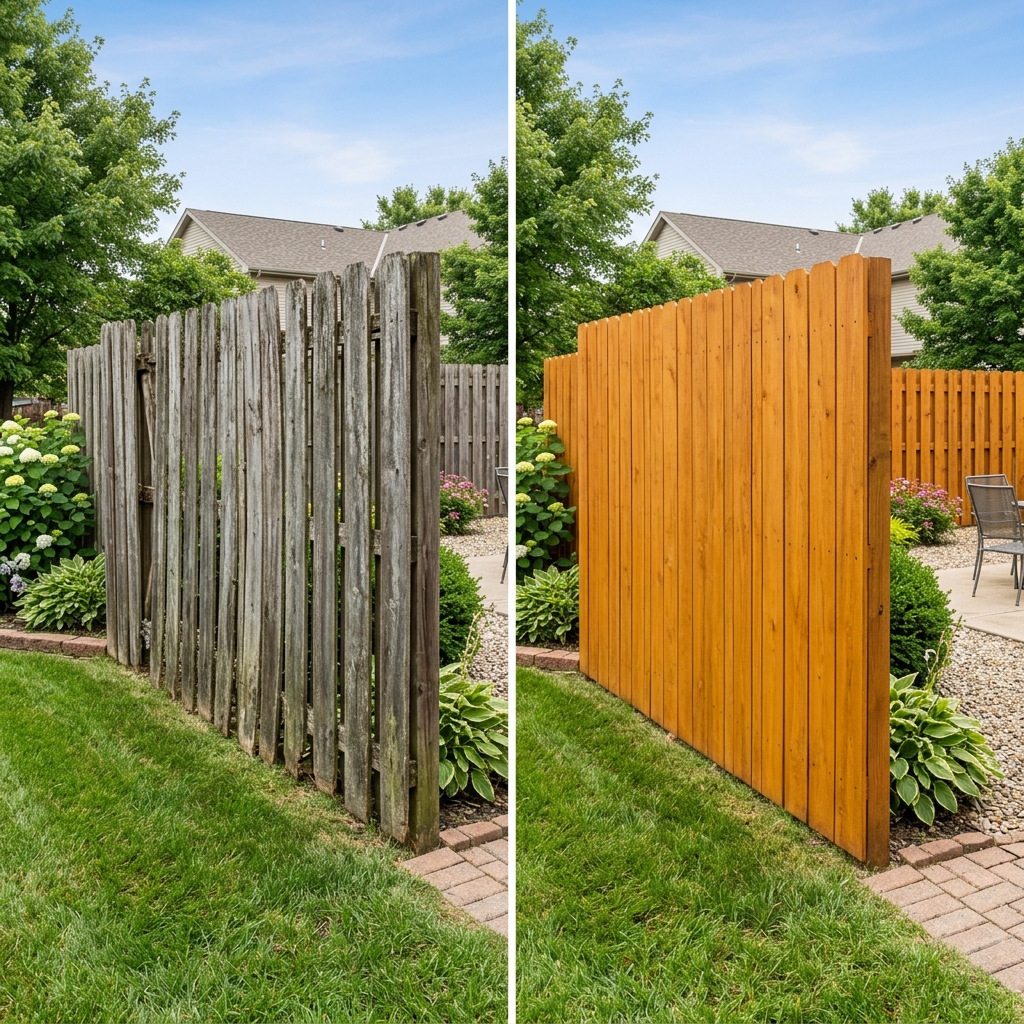
Toronto homeowners replace fences that didn't need replacing every season, and restore fences that should have been replaced. The decision between restoration and replacement comes down to the condition of the structural components — not the surface appearance. A fence that looks terrible can often be transformed. A fence that leans, has rotting posts, or has failed at grade level is a different problem entirely. This guide gives you a clear framework for making the right call.
The Real Cost of Fence Replacement in the GTA
In 2026, replacing a standard cedar privacy fence in the Greater Toronto Area runs between $45 and $85 per linear foot installed, depending on height, post depth, and whether your installer is removing and disposing of the old fence. A typical 100-foot backyard fence is a $4,500 to $8,500 project before you factor in permit requirements in some municipalities or complex lot lines.
Professional fence restoration — including power washing, chemical brightening, sanding rough sections, and two coats of contractor-grade stain — typically runs 15 to 25% of replacement cost for the same fence. For most homeowners with a structurally sound fence, it is not a close comparison.
The question is not whether restoration is cheaper. It is whether restoration is appropriate for your specific fence.
Signs Your Fence Can Be Restored
These conditions indicate professional restoration will deliver strong results:
- Greying and surface weathering — oxidation and UV bleaching are cosmetic. Professional cleaning and brightening reverses years of grey discoloration in a single day
- Peeling or worn stain — old failing finish can be stripped and replaced with a fresh penetrating stain that protects for the next three to five years
- Surface mold, mildew, or algae — biological growth is eliminated with commercial-grade mildewcides during the cleaning phase. It does not indicate structural damage
- Minor checking or surface cracking — small surface checks in cedar boards are normal weathering. They accept stain and are not structural concerns
- Sound posts at grade level — the single most important structural check. If posts are firm and not rotting where they meet the ground, the fence has years of life ahead
- Tight, upright rails and boards — pickets and rails that are still properly attached and holding their positions indicate a structurally sound fence
Signs You Need Replacement
No amount of staining will fix these issues — and attempting to mask them with a coat of paint buys time while the underlying problem worsens:
- Rotting posts at or below grade — this is the most common reason for full fence failure. Posts that have rotted where they meet the soil cannot be restored. Once a post goes, sections fall
- Leaning sections that won't stay plumb — if the fence leans significantly and does not return to vertical when pushed, the post bases have failed
- Extensive rot in pickets or rails — soft, spongy wood that crumbles under pressure is beyond restoration. If more than 20 to 30% of pickets are in this condition, replacement is more cost-effective than selective repairs
- Structural damage at the frame — cracked or broken rails that are no longer supporting the pickets properly indicate framing failure
- Previous solid paint over failing wood — if the fence was painted with a solid opaque coating over wood that was already deteriorating, stripping and restaining will reveal damage that cannot be fixed with surface treatment
What the Restoration Process Involves
A professional fence restoration follows a structured sequence that makes the difference between a finish that lasts one season and one that lasts five:
- Initial inspection — posts are checked for rot at grade, rails checked for structural integrity, all pickets assessed for condition before any work is quoted
- Low-pressure washing — cedar is a softwood. High-pressure washing at the wrong angle raises the grain and causes fuzzing that stain cannot fix. We wash cedar fences under 800 PSI with specialized wood cleaners
- Chemical brightening — a wood brightener (typically oxalic acid-based) is applied after washing to neutralize the pH and restore the wood's natural colour. This step is what makes the grey disappear
- Drying period — the fence must reach 15% moisture content or lower before stain is applied. Staining wet wood traps moisture and causes premature finish failure
- Stain application — two coats of a penetrating oil-based stain are applied, with adequate dry time between coats. The first coat conditions the wood fiber; the second seals it
The total process typically takes two days for a standard backyard fence — one day for washing and drying, one day for staining.
Stain Types for Fences
The right stain for a fence is different from what you might choose for a deck, for one key reason: fences are viewed from a distance and see less foot traffic. That changes the priority.
- Transparent stains — show the natural wood grain fully. Beautiful on clean cedar but require reapplication every one to two years as they offer minimal UV and moisture protection on their own
- Semi-transparent stains — the professional standard for most cedar fences. Provide significant UV and moisture protection while still allowing the grain to show through. Typical lifespan: three to four years in the GTA climate
- Semi-solid stains — richer pigment that largely covers the grain but still penetrates the wood. Good choice for older fences where weathering marks are present and you want a more uniform appearance
- Solid stains — fully opaque, similar in appearance to paint but still a penetrating product. Once you go solid, future recoats require the same product or a full strip
For most cedar privacy fences in the GTA, a semi-transparent penetrating oil-based stain in a natural cedar or honey tone is the right call. It protects the wood, looks authentic, and is the easiest to maintain going forward.
How Long Does a Restored Fence Last?
A professionally cleaned, brightened, and stained cedar fence in good structural condition will typically hold a quality penetrating oil-based finish for three to five years in Toronto's climate before the next maintenance cycle. That is not a replacement cycle — it is a recoat. The restoration investment stretches the life of the existing fence by a decade or more when maintained on schedule.
Comparison: a cedar fence that is never stained or sealed will typically begin showing significant structural deterioration within eight to twelve years in Ontario's climate. The same fence, maintained with professional restoration every three to four years, routinely reaches 20 to 25 years before replacement is genuinely warranted.
The math is straightforward. One replacement at $6,000 against four restoration cycles at $700 to $1,200 each over the same period. Restoration wins by a wide margin — provided the structural bones of the fence are still sound.
Frequently Asked Questions
Can I stain a fence that was previously painted?
Not directly. Paint or solid film-forming coatings must be fully stripped before a penetrating stain can be applied. Applying stain over paint produces a patchy, non-adhering result that peels quickly. If your fence was painted, stripping is the first step — which adds cost but is necessary to get back to a maintainable penetrating finish.
How do I check if my fence posts are rotting?
Push firmly at the top of each fence post. A post with a sound base should feel completely firm with no movement. A rotting post will flex or rock. You can also probe the base with a screwdriver — if it sinks into the wood easily at grade level, the post has begun to rot. Post rot almost always starts underground and works upward.
My fence is 15 years old. Is it too old to restore?
Age is less relevant than condition. A 15-year-old cedar fence that has been maintained has excellent structural integrity and restores beautifully. A 10-year-old fence that was never treated may already have post rot. Have the posts and structural members inspected — if they are sound, the fence is a restoration candidate regardless of age.
How soon after restoration can I paint over it?
We do not recommend applying paint over a professionally stained fence. Paint traps moisture, prevents the wood from breathing, and eventually peels. If you want a solid color look, a solid or semi-solid penetrating stain achieves it while allowing the wood to move and breathe seasonally — which is why penetrating stains outlast paint on exterior wood.
Get Your Free Quote
Tell us about your project — we get back within 1 business day with honest pricing.