
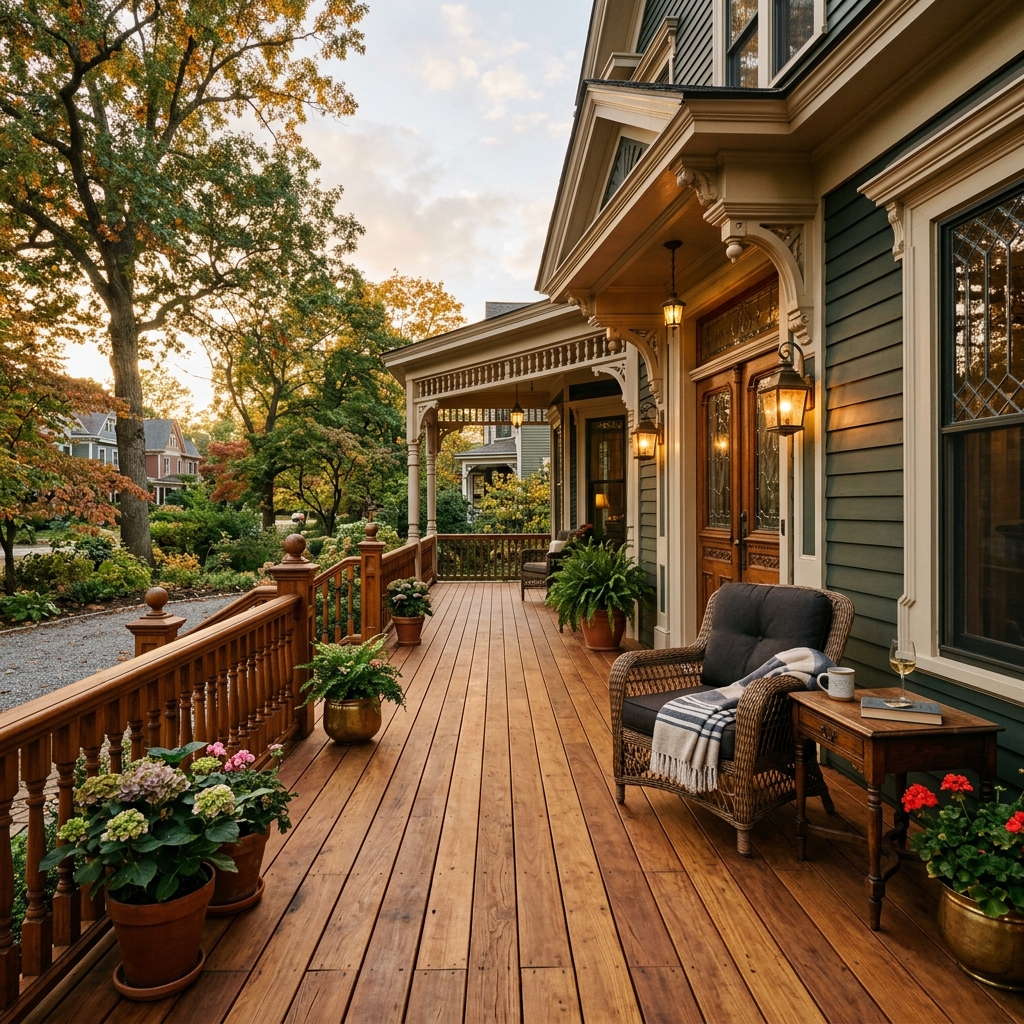
Drive down Main Street in Unionville and you are looking at a streetscape that pre-dates most of the GTA by a century. The cedar porches, hand-cut railings, and tongue-and-groove decking on these century homes were built to standards that rarely exist in modern construction — and they require restoration approaches that most deck contractors are not equipped to deliver. This guide explains what makes heritage deck restoration genuinely different from standard suburban work, what to expect in 2026 pricing, and how to evaluate whether a contractor actually has heritage experience or is just charging the heritage premium without delivering the heritage methods.
Why Heritage Decks Need Different Restoration
The fundamental difference between a heritage cedar porch in Unionville and a 2010-built suburban deck in Cornell is not age — it is construction quality, material specification, and the stakes of getting restoration wrong. Three structural differences drive everything.
Original-growth cedar. Century-old cedar porches were built with old-growth or first-cutting cedar that has tighter grain, denser fibre structure, and dramatically different absorption characteristics than modern second-growth cedar. Products and techniques calibrated for modern lumber over-saturate heritage cedar, producing visible blotching that cannot be undone.
Hand-cut joinery and trim detail. Heritage spindle railings were cut individually rather than mass-produced. Restoration that replaces failed elements with modern stock is visible and devalues the property. Heritage-capable restoration repairs original elements rather than substituting.
Layered finish history. A century-old porch may have ten or twelve previous finish cycles in different products and chemistry. Aggressive stripping that works on modern construction can damage heritage cedar to the point of requiring board replacement. The right approach uses gentler chemistry and accepts longer prep timelines.
Identifying Heritage Cedar vs Modern Installations
Not every old-looking deck is heritage construction. The visual cues that indicate heritage versus modern installation:
- Board width and length: heritage cedar typically uses wider boards (6 to 8 inches wide) in long unbroken runs. Modern decking is usually 5.5 inches in standard 8 to 12 foot lengths.
- Joinery method: heritage construction uses square-cut nails (visible if rusty), hand-cut joinery, and tongue-and-groove decking. Modern decking uses screws or hidden fasteners and butt-joint installation.
- Spindle and railing detail: heritage spindles show individual hand-cut variation; modern spindles are dimensionally identical because they were lathe-turned in batches.
- Wood density: heritage cedar feels heavier per board than modern cedar of equivalent dimension because of the tighter grain structure of older lumber.
- Existing finish history: visible layered finish remnants in different colours indicate decades of previous restoration cycles.
If a contractor cannot tell the difference between heritage and modern construction within five minutes of arriving on site, they do not have the experience to do heritage work safely.
Heritage Conservation District Considerations
Markham has several Heritage Conservation Districts, with Unionville Main Street being the most architecturally significant. Properties within designated districts may face restrictions on visible exterior changes, including in some cases the colour of stain applied to visible exterior wood. Restoration that materially changes the visible character of a designated property without proper review can result in compliance issues that the property owner inherits.
The practical implication: heritage-capable contractors familiar with Markham districts will discuss colour selection in conservation-aware terms, sometimes recommend matching the original aesthetic over modernization, and document the work in a way that supports any future compliance review. They will also advise property owners when proposed work might require formal heritage consultation before proceeding.
Note: this is not legal advice. Heritage Conservation District requirements vary by specific designation and property — always verify current requirements with Markham's heritage planning office before significant exterior work on a designated property.
The Mature Canopy Challenge in Unionville and Markham Village
Heritage districts in Markham share another characteristic that affects deck restoration: mature tree canopy. The streets surrounding Unionville Main Street and the heritage blocks of Markham Village have spectacular tree cover that traps moisture against deck surfaces for weeks at a time after rainfall. The constant damp accelerates mould growth and prevents stain from curing on its standard schedule.
Heritage decks under mature canopy fail differently from sun-exposed decks. Sun-exposed decks lose finish primarily through UV degradation; canopy-shaded decks lose finish primarily through biological growth. The right product approach for shaded heritage decks emphasizes biocide loading over UV inhibition, which is the opposite of what suburban deck contractors typically specify.
The Right Products for Heritage Cedar
Heritage cedar restoration is one of the situations where product choice matters more than for almost any other exterior wood work. Three categories perform well:
- Non-drying penetrating oils — never form a hard film, never peel, can be reapplied years apart without stripping. These are the safest choice for heritage cedar because the finish remains renewable indefinitely without requiring aggressive removal between cycles.
- EPA-registered preservative stains — high biocide loading appropriate for canopy-shaded heritage decks where mould pressure is the primary failure mode.
- Tung-oil-based finishes — produce the warm, traditional appearance most appropriate for heritage Conservation District properties where modernized aesthetics would conflict with district character.
What to avoid on heritage cedar: solid stains and paints. Once a film-forming finish is applied to heritage cedar, all future restoration cycles require complete stripping back to bare wood. That repeated stripping cycle damages original material that cannot be replaced. Heritage cedar should always remain in penetrating-finish category for long-term preservation.
Cost Expectations for Heritage Restoration
Heritage deck and porch restoration in Markham heritage districts prices above standard suburban work because the methods are different and the stakes are higher. Honest 2026 ranges:
- Heritage cedar porch restoration (typical Unionville century home, 200-400 sq ft with full railing detail): $4,500 to $9,500 for cleaning, brightening, hand-application on heritage spindles, and two coats of contractor-grade penetrating oil
- Heritage tongue-and-groove cedar deck (400-700 sq ft): $5,500 to $11,500
- Heritage spindle and railing repair (per failed element): $85 to $250 depending on complexity and whether replacement matches original detail
- Conservation District compliance assessment: typically included with quote on designated properties
The premium versus modern suburban work reflects three factors: the careful chemistry and gentler methods required for heritage material, the hand-application versus spray-application skill premium, and the additional inspection and documentation expected on heritage properties.
Timeline and Scheduling
Heritage restoration takes longer than suburban work for the same square footage. A heritage cedar porch that would be a one-day job on a modern construction timeline typically takes two to three days of crew time when properly executed: gentler chemistry requires longer dwell times, hand-application takes substantially more time than spray-application, and the inspection and documentation expectations on heritage work add time at multiple stages.
Scheduling considerations specific to Markham heritage districts:
- Main Street Unionville visibility means scheduling around peak weekend foot traffic to avoid disrupting the heritage streetscape
- Mature canopy delays drying after rainfall — typical inland scheduling cushions need to expand by 24 to 48 hours after weather events
- Heritage assessment phase requires daylight hours for proper wear-layer evaluation
- Application phase scheduling should respect the three to five day window required for full cure before exposing to heavy foot traffic
How to Evaluate Heritage-Capable Contractors
Many contractors will quote heritage work; far fewer have the experience to deliver it. Five questions that quickly separate genuine heritage capability from heritage premium without heritage methods:
- Can you show me three completed Markham heritage projects in the past two years, with addresses I can drive past? Real heritage experience generates a portfolio. Vague references to "heritage work in the GTA" usually mean none specifically in Markham districts.
- What is your approach if my property is in a Heritage Conservation District? Heritage-capable answer: discusses district-specific awareness, may recommend formal consultation, will document work for compliance support. Inadequate answer: dismisses the question or offers no district-specific approach.
- Will you hand-apply on heritage spindles or spray? Heritage-capable answer: hand-application throughout. Inadequate answer: spray for speed.
- How would you handle a damaged heritage spindle? Heritage-capable answer: discusses repair-vs-replacement evaluation, custom matching, and the value premium of preserving original elements. Inadequate answer: defaults to replacement with modern stock.
- What product category do you recommend for heritage cedar and why? Heritage-capable answer: discusses non-drying penetrating oils or EPA-registered preservatives, explains why film-forming finishes are wrong for heritage material. Inadequate answer: defaults to whatever they have on the truck without explaining heritage-specific reasoning.
Heritage vs Standard Restoration: What Changes
Restoring wood on a heritage property is not the same job as restoring a modern deck, and the differences are practical rather than ceremonial. Every choice leans toward preserving original material:
| Standard restoration | Heritage restoration | |
|---|---|---|
| Damaged material | Replace the board | Consolidate and repair; replace only as a last resort |
| Surface prep | Machine sanding across the field | Hand work on profiles and spindles to preserve detail |
| Application | Brush and back-roller, spray on large areas | Hand application throughout on visible elements |
| Colour | Homeowner preference | Matched to the period and, in a district, to the streetscape |
| Old paint | Strip and refinish | Pre-1978 layers may need certified lead-safe handling |
| Approvals | Permit only if structural | Heritage district rules may govern visible exterior changes |
The lead paint row is the one to take seriously on any Markham property built before the late 1970s. Sanding or heat-stripping old paint without proper containment disperses lead dust across the site, and it is a genuine health matter rather than a formality. Confirm what is on the wood before anyone starts removing it.
Unionville and Markham Village properties also sit under heavy canopy, which brings the moisture and algae problems that shorten finish life on shaded lots. Our Markham wood restoration page covers the local conditions, and deck permits for restoration explains when repair scope crosses into permit territory. Heritage work through our deck refinishing service is quoted per project after a free on-site assessment.
Frequently Asked Questions
How do I know if my Markham deck is genuinely heritage construction?
A few visual cues quickly distinguish heritage from modern: heritage cedar typically uses wider boards (6 to 8 inches), longer unbroken runs, hand-cut joinery, square-cut nails, and tongue-and-groove decking rather than butt-joint installation. Heritage spindles show individual hand-cut variation rather than the dimensional identity of modern lathe-turned stock. If you live in Unionville Main Street area or the heritage blocks of Markham Village, your deck is more likely heritage than not.
Will heritage restoration cost more than standard deck restoration?
Yes, typically 30 to 60 percent more for equivalent square footage. The premium reflects gentler chemistry, longer dwell times, hand-application throughout, additional inspection and documentation, and the careful approach required to avoid damaging irreplaceable heritage material. The premium is real but it preserves property value that aggressive standard restoration would damage.
Do I need permission to restore my deck if I am in a Heritage Conservation District?
It depends on the specific district designation and the nature of the work. Visible exterior elements may be subject to review; interior work and non-visible exterior work usually is not. The most reliable approach is contacting Markham heritage planning before significant exterior work on a designated property, and choosing a contractor who can support any review documentation that may be required.
Can heritage cedar be sanded the same way as modern cedar?
No — heritage cedar typically has a thinner remaining wear layer after decades of previous restoration cycles. Aggressive sanding that works on modern construction can damage heritage material to the point of requiring board replacement. The right approach uses gentler chemistry to remove failed finish without aggressive abrasion, then targeted hand-sanding only on areas that genuinely require it.
How often will a properly restored heritage cedar porch need attention?
With premium non-drying penetrating oils applied over thorough preparation, four to six years on heritage cedar before another full restoration cycle. Annual cleaning between cycles dramatically extends finish life and preserves the heritage material for the next generation. The maintenance schedule for heritage cedar is the same principle as for modern cedar — regular attention is dramatically cheaper than emergency intervention after major failure.
Get Your Free Quote
Tell us about your project — we get back within 1 business day with honest pricing.