
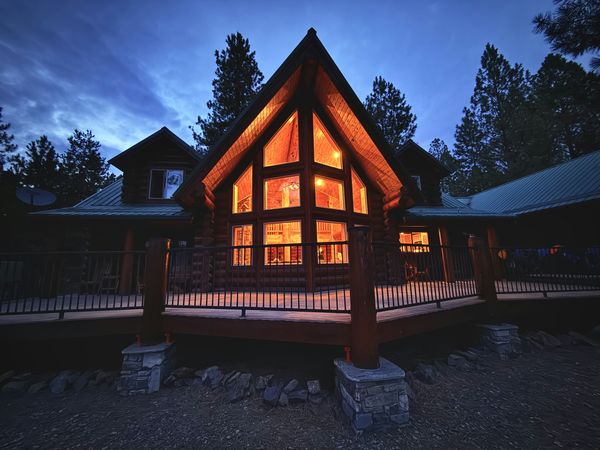
A log home is one of the most beautiful and enduring structures a person can own — but also one of the most demanding to maintain. Ontario's climate, with its harsh winters, humid summers, and intense UV exposure, accelerates the natural processes that break down wood. Without proper maintenance, the consequences range from cosmetic deterioration to serious structural damage. This guide gives Ontario log home owners a clear roadmap for preservation.
Why Log Homes Fail Without Maintenance
Log homes are inherently more vulnerable than conventional stick-frame construction because the structural elements are exposed directly to the elements. Each log is a living material that responds to temperature, humidity, UV radiation, and biological attack from fungi and insects.
UV Degradation
Ultraviolet radiation breaks down lignin — the natural binder that holds wood fibers together. Without UV-protective finish, logs grey out and the surface becomes punky (soft and fibrous). This degradation layer can be 2–4 mm deep within a few years of exposure, making it a significant maintenance concern.
Moisture Intrusion and Rot
Moisture is the primary enemy of log homes. Water drives deep into unprotected wood, creating the wet conditions that rot fungi need to thrive. Once established, rot spreads rapidly through logs — often invisible on the surface until significant structural damage has already occurred. The key areas to watch are log ends, any horizontal surfaces that collect water, and areas near grade where splash-back constantly wets the base courses.
Checking and Cracking
As logs dry and seasonal humidity changes, they check (crack along the grain). These checks create pathways for water penetration and insect entry. While some checking is unavoidable, proper sealing makes checks a cosmetic feature rather than a structural vulnerability.
Insect Damage
Carpenter bees, wood-boring beetles, and in some cases carpenter ants can attack unprotected or deteriorated logs. Boron-based preservatives are highly effective preventive treatments that resist insect attack without harmful toxicity.
Annual Inspection Checklist
A thorough annual inspection is the best investment log home owners can make. Early detection of problems is far less expensive than emergency repair.
Spring Walk-Around
- Check all log ends — probe with a screwdriver to detect soft wood indicating rot
- Inspect chinking and caulking for cracks or separation from logs
- Look for new checking and assess whether existing checks have widened
- Check round holes in logs that indicate carpenter bee activity
- Assess finish condition — is water beading or absorbing?
- Examine base courses near grade for splash-back moisture damage
The Screwdriver Test
Press a standard screwdriver firmly into log ends and any suspicious areas. Sound wood resists firm pressure. If the screwdriver penetrates easily or sinks in with minimal force, rot is present. This simple test takes minutes and can save tens of thousands of dollars in avoided structural repairs.
Media Blasting: The Professional Standard
For log homes requiring full refinishing — either due to finish failure, heavy graying, or desire for a new color — media blasting is the professional standard of preparation.
How It Works
A pressurized stream of fine abrasive media (corn cob grit is most common for log homes) strips old finish, gray surface fibers, and contaminants from every surface of the log — including checks, crevices, and the round profile that mechanical sanding can't reach properly. The result is clean, bright wood ready for immediate stain application.
Advantages Over Power Washing and Sanding
- Complete coverage: Reaches every curve, corner, and check equally
- No water damage: Dry media doesn't add moisture to the logs
- Controlled aggression: Media type and pressure adjusted to remove only what needs removing
- Faster results: Complete exterior stripped and ready in 1–3 days vs weeks for hand sanding
Chinking and Caulking
The joints between logs are sealed with either chinking (a mortar-like textured material used between larger gaps) or caulking (a flexible elastomeric sealant used in checks and smaller gaps). Both must be maintained to keep moisture out of the log home envelope.
Signs of Failed Chinking
Cracks through the chinking, separation from either log surface, crumbling, or areas where you can see daylight through the wall all indicate failed chinking that must be repaired before refinishing. Water infiltrating through chinking voids causes hidden rot in wall cavities that may not be visible for years.
Professional Application
Proper chinking application requires clean, dry log surfaces for adhesion. A backer rod is installed in large gaps before chinking to prevent three-point adhesion (which causes tearing). Two-point adhesion — chinking bonds only to the top and bottom log, not the backing — allows the joint to flex as logs move seasonally without cracking.
Log Home Stain Selection
Log homes require different products than conventional deck staining. The formulation must penetrate deeply, provide UV and moisture protection, be breathable (allowing moisture vapor to escape), and be durable enough to handle the thermal mass and seasonal movement of large logs.
Penetrating Oil-Based Stains
Specialty products formulated for log homes penetrate deeply, do not film-form (so they cannot peel), and provide outstanding UV protection. These are the professional recommendation for Ontario log homes.
Application Tips
Always apply log home stains to clean, dry wood — ideally below 15% moisture content. Work in shaded conditions to prevent rapid absorption that causes lap marks. Two thin coats penetrate more effectively than one heavy coat. End grains receive an additional coat due to their higher absorption.
Long-Term Maintenance Schedule
Log homes reward consistent maintenance with generational longevity. This schedule keeps your investment protected:
- Annually: Full inspection, clean and treat any mildew, check and reapply caulk to new checks
- Every 3–5 years: Full professional cleaning, chinking inspection and repair, fresh stain application
- Every 10 years: Full media blast restoration to bare wood, complete re-chinking inspection, and premium multi-coat stain application
Beaver Wood Restoration has extensive experience with Ontario log home and cottage restoration across Muskoka, Haliburton, and the GTA. Contact us for a free on-site assessment and personalized maintenance plan.
The Restoration Sequence, Stage by Stage
Log home restoration follows a fixed order, and the order is not negotiable — each stage depends on the one before it being finished properly. Skipping ahead is the most common reason a expensive restoration fails early:
| Stage | What happens | Why it cannot be skipped |
|---|---|---|
| 1. Assessment | Moisture readings, probe testing for rot, chinking survey | Determines whether logs need repair before any finish decision |
| 2. Media blasting | Corn cob or crushed glass removes failed finish and grey fibre | Gentler on aged softwood than chemical stripping; opens the wood |
| 3. Log repair | Rot excision, borate treatment, sill log replacement where needed | Sealing over decayed wood traps the problem inside the wall |
| 4. Chinking and sealing | Failed chinking removed and replaced; checks sealed | Upward-facing checks channel water into the log interior |
| 5. Staining | Two coats of breathable penetrating finish | Must be breathable — a sealed log cannot release interior moisture |
Stage five carries the detail most homeowners never hear: a log wall needs to breathe. Logs hold and release moisture seasonally, and a film-forming coating that seals the surface traps that moisture inside the wood, where it feeds decay from within. This is the same physics that makes rigid finishes fail on decks through thermal movement, which we cover in penetrating versus film-forming finishes.
Chinking failure deserves attention too. Chinking is designed to bond to the logs on two surfaces and flex between them; when it accidentally bonds on a third surface it cannot stretch and tears instead. We are one of the few Ontario contractors certified for log home media blasting, and our log home restoration work is quoted per project after a free on-site assessment, with a 3-year written warranty on workmanship.
Frequently Asked Questions
How often does a log home need to be refinished?
Most log homes in Ontario require a fresh application of stain and sealer every 3–7 years depending on the quality of the previous application, the exposure of the home, and the wood species. South and west-facing walls typically need more frequent attention due to higher UV and moisture exposure.
What is media blasting and why is it better than sanding for log homes?
Media blasting uses a pressurized stream of fine abrasive media (corn cob, walnut shell, or glass bead are common) to strip old finishes and surface gray wood without damaging the underlying log. Unlike mechanical sanding, it reaches corners, checks, and round surfaces perfectly. It is the industry standard for log home refinishing.
What causes checking in logs and is it a problem?
Checking is the natural process of cracks forming along the grain as logs dry out and moisture levels change seasonally. Some checking is cosmetic — narrow surface checks are normal and can be treated with sealant. Deep checks that collect water need to be caulked to prevent moisture intrusion and accelerated rot.
Can rot in a log be repaired without replacing the entire log?
In many cases, yes. Localized rot can be removed by borate treatment and filled with consolidant and wood filler, or in severe cases, a Dutchman repair where a section of wood is removed and replaced. Widespread or structural rot typically requires log replacement — which is why early detection matters so much.
Get Your Free Quote
Tell us about your project — we get back within 1 business day with honest pricing.