
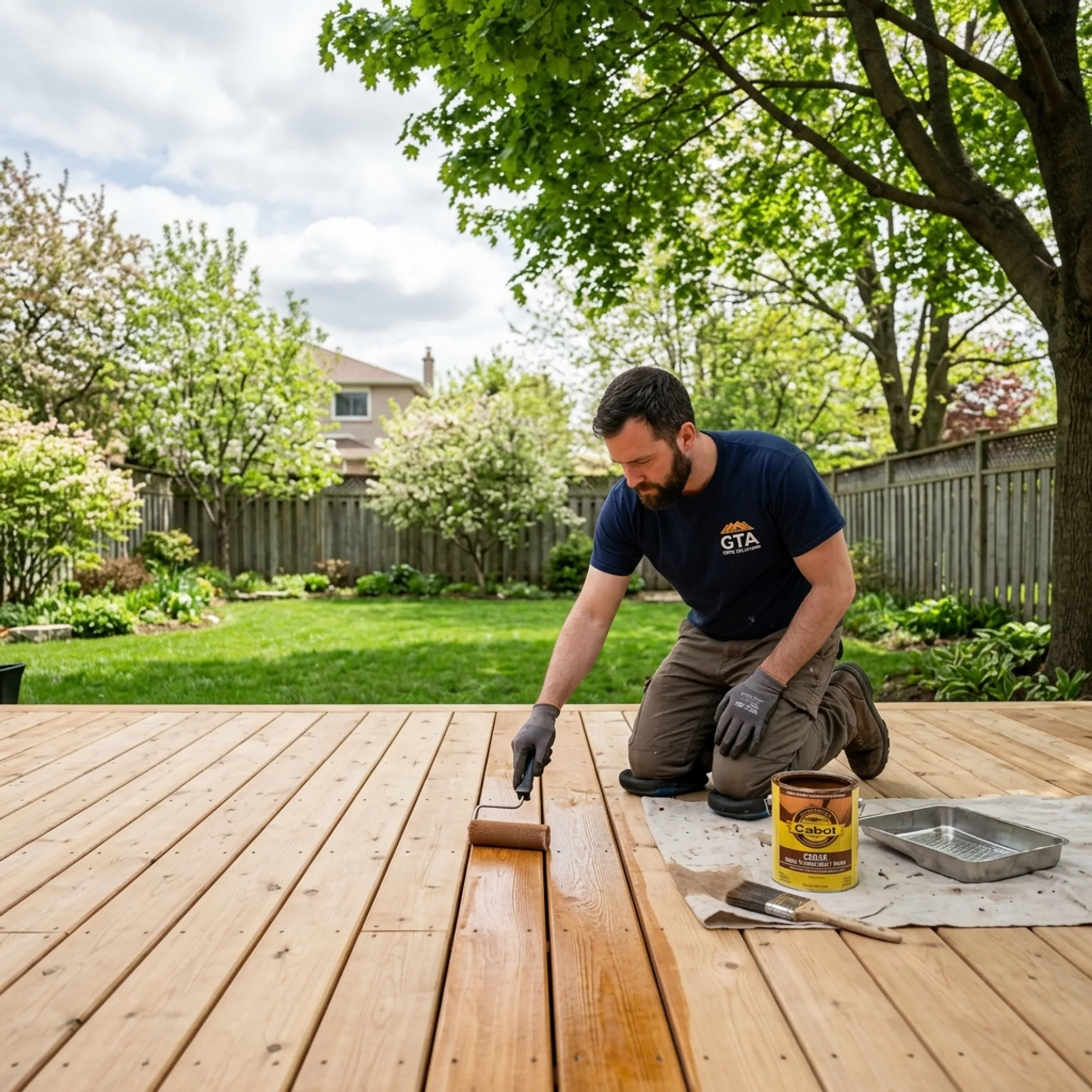
You can buy the best stain on the market, prep the wood perfectly, and still get a failed finish if you apply it on the wrong day. Temperature, humidity, wood moisture, and rain timing decide whether a stain penetrates and cures or sits on the surface and peels within a season. In the GTA, the best windows are usually late May through June and early to mid September — not the hot, humid stretch of mid-July that most people assume is ideal. This guide covers the exact conditions to look for, the ones that ruin a coat, and a simple go or no-go checklist you can run the morning of the job.
Quick Answer: The Ideal Window for Staining a Deck
The ideal conditions for staining a deck in the GTA are an air and surface temperature between 10°C and 29°C (50°F to 85°F), moderate humidity, wood that has been dry for at least 24 to 48 hours, and no rain in the forecast for 24 to 48 hours after application. The surface should be out of direct, blazing sun at the moment you apply. In a typical Toronto year, the two best stretches are late May through June and early to mid September.
Most homeowners assume the hottest, driest week of summer is best. It usually is not. Mid-July heat dries a stain too fast on the surface before it can penetrate, which causes lap marks and poor adhesion. The goal is steady, moderate conditions and dry wood — not maximum heat.
Temperature: Air and Surface
Both the air temperature and the temperature of the wood surface matter, and they are not the same thing. A dark deck in direct sun can be 15°C to 20°C hotter than the air. Here is what the temperature band controls:
- Below 10°C: most penetrating oils and film finishes will not cure properly. The stain stays tacky, attracts dust and pollen, and never reaches full hardness. Overnight lows matter too — if the temperature drops below the product minimum while the coat is still curing, you can ruin an otherwise good application. This is the main risk with late-fall jobs.
- 10°C to 29°C: the working zone. The stain penetrates, levels, and cures at a sensible pace, giving you time to maintain a wet edge and avoid lap marks.
- Above 30°C, or any surface in direct hot sun: the stain flashes off too quickly. It dries on the surface before it can soak into the wood, leaving lap marks where overlapping passes dried at different rates, and leaving the wood under-protected because little product actually penetrated.
The practical rule professionals use: follow the shade. Stain the sections of the deck that are shaded at that hour, and come back to the sunny sections later in the day when the sun has moved off them. Never stain a board you cannot comfortably hold your hand flat against.
Humidity, Wood Moisture & Dew Point
Three moisture-related conditions decide whether a stain bonds:
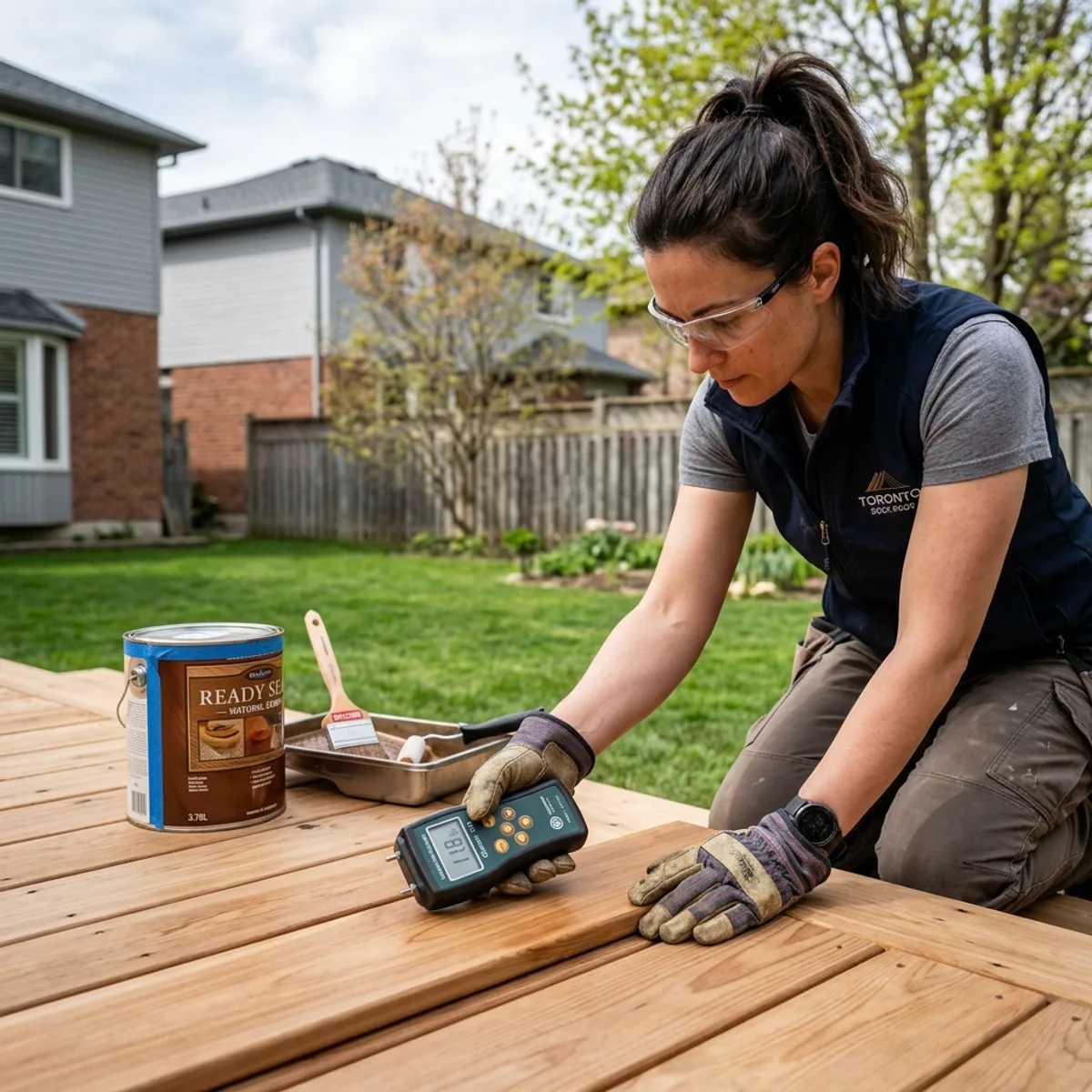
Wood moisture content. The wood itself must be dry before you stain — ideally below about 15% moisture content. Wet or damp wood cannot absorb a penetrating finish; the water is already occupying the pores. After rain, or after pressure washing during prep, cedar and pine typically need 24 to 48 hours of dry weather to release that moisture. A quick field check: sprinkle a little water on the board. If it soaks in, the wood is dry enough to take stain; if it beads, the wood is either still sealed or still wet.
Relative humidity. Very high humidity (consistently above roughly 80%) slows curing and keeps the surface tacky longer, which extends the window during which dust, insects, and a surprise shower can damage the coat. A relative humidity in the 40% to 70% range is comfortable for both oil and film finishes.
Dew point. This is the trap that catches well-intentioned DIY jobs. If you apply stain late in the day and the surface cools to the dew point overnight, moisture condenses on the curing finish and can cause a hazy blush, poor adhesion, or a blotchy look. Stop staining with enough daylight and warmth left for the coat to set before evening dew forms — generally finish a few hours before sunset, not at dusk.
The Rain Window Before and After
Rain is the most common reason a stain job goes wrong, and it works on both ends of the job:
- Before: the wood needs to be dry. Give it 24 to 48 hours of dry weather after any rain (or after pressure washing) before applying. Do not forget morning dew — a deck that got soaked with dew overnight is not ready first thing in the morning; it needs a few hours of sun and air first.
- After: the fresh coat needs to set before it gets wet. Penetrating oils generally need at least 24 hours of dry weather after application; some film-forming finishes want 48 hours. Rain on an uncured coat can wash out colour, leave water spots, and cause the finish to fail in patches. Always check the forecast for a clear 48-hour window before you start.
This is why we never quote staining work by phone for a specific day far in advance — the weather window is real, and pushing a job into the wrong conditions guarantees a callback.
Spring vs Fall vs Midsummer in the GTA
Each season has a personality in this climate:
Late spring (late May–June): often the best window. Temperatures are in the working band, days are long, and humidity is usually moderate. The one caution is wood moisture — after a wet spring and snowmelt, decks can still be carrying water, so confirm the wood is dry before starting. Pollen season can also drop a layer onto a tacky finish, so watch the curing window.
Early fall (early–mid September): the other prime window. Stable, moderate temperatures, lower humidity, and wood that has dried out over summer make September excellent for staining. The cautions are shorter days, heavier morning dew, and the risk of an early cold snap. Aim to finish by mid-September so you are not fighting overnight lows or dew while the coat cures. Our fall deck maintenance guide covers getting a deck protected before winter.
Midsummer (mid-July–August): workable but harder. The heat that feels ideal is actually the enemy — surface temperatures soar in the sun and stain flashes off too fast. Midsummer work is best done early in the morning and by following the shade. See our summer deck preparation checklist for getting ahead of the season.
Spring prep matters as much as timing. A lot of a successful stain job is done before staining season even opens — see our spring deck preparation checklist. And remember that timing and frequency work together: getting the window right does not help if the deck was overdue, so check whether yours is due using our guide on how often to restain a deck in Toronto.
Go / No-Go Checklist
Run this the morning of the job:
| Condition | Go | Wait |
|---|---|---|
| Air temperature | 10°C–29°C and holding | Below 10°C, or overnight low below product minimum |
| Surface in sun | Shaded, comfortable to touch | Hot to the touch in direct sun |
| Wood moisture | Dry 24–48 hrs; water soaks in | Rained recently, or water still beads from damp |
| Rain forecast | Clear for 24–48 hrs after | Rain expected within the curing window |
| Time of day | Enough daylight to cure before dew | Late afternoon with dew/cool night coming |
If any row lands in the "Wait" column, the safe call is to wait. A stain job done in the right window lasts years; one rushed into the wrong conditions can fail in a single season. We schedule GTA deck staining around these windows and provide free on-site assessments to plan the right timing for your project.
Frequently Asked Questions
What temperature should it be to stain a deck?
Aim for an air and surface temperature between 10°C and 29°C (50°F to 85°F). Below 10°C, most stains will not cure properly and stay tacky; above 30°C, or on any board sitting in direct hot sun, the stain dries too fast to penetrate and leaves lap marks. Check overnight lows too — if the temperature drops below the product minimum while the coat is still curing, the finish can fail. The professional rule is to follow the shade and never stain a board that is hot to the touch.
How long does a deck need to be dry before staining?
Give the wood 24 to 48 hours of dry weather after any rain or after pressure washing before you apply stain. Cedar and pressure-treated pine need that time to release moisture so a penetrating finish can soak in. Do not forget morning dew — a deck soaked overnight needs a few hours of sun and air before it is ready. A quick test: sprinkle water on the board; if it soaks in, the wood is dry enough to stain.
Can you stain a deck if it is going to rain?
No — you need a clear window of at least 24 hours after application for penetrating oils, and up to 48 hours for some film-forming finishes. Rain on an uncured coat washes out colour, leaves water spots, and causes patchy failure. Always check the forecast for a clear 24 to 48 hour window before starting, and account for overnight dew as well as actual rain.
What is the best month to stain a deck in Toronto?
In the GTA, the two best windows are late May through June and early to mid September. Late spring offers warm temperatures, long days, and moderate humidity (just confirm the wood has dried out after snowmelt). Early fall offers stable, moderate temperatures and dry wood, with the caveat of shorter days and heavier dew. Midsummer is workable but harder because surface temperatures in direct sun get too high for good penetration.
Is it better to stain a deck in spring or fall?
Both are excellent; the choice depends on your deck. Spring is ideal if the wood has fully dried out from winter and snowmelt, and it protects the deck through the whole summer season. Fall is ideal because temperatures are stable and the wood is dry after summer, and it gets the deck protected before harsh winter freeze-thaw — but you must finish by mid-September to avoid cold overnight lows and heavy dew while the coat cures.
Get Your Free Quote
Tell us about your project — we get back within 1 business day with honest pricing.