

Almost every homeowner with a new deck gets the same advice: wait six months to a year before staining. It is well-meant, and for a lot of decks it is roughly right — but it is a guess dressed up as a rule. What actually decides readiness is not the calendar. It is how much moisture is still in the wood and whether the surface will accept a finish at all. A wet-treated deck built in April on a shaded Mississauga lot and a kiln-dried deck built the same week on an open lot in Vaughan can be ready months apart. This guide covers the five-minute test that settles it, why some new decks are ready in weeks and others need a full season, and what actually goes wrong when the first coat goes on too early.
Quick Answer: When Is New Pressure-Treated Wood Ready to Stain?
New pressure-treated lumber is ready for stain when the wood is dry enough to absorb it — typically somewhere between one and six months after the deck is built, depending on how the lumber was treated, how it was stored, the season, and your lot. There is no fixed waiting period that is correct for every deck.
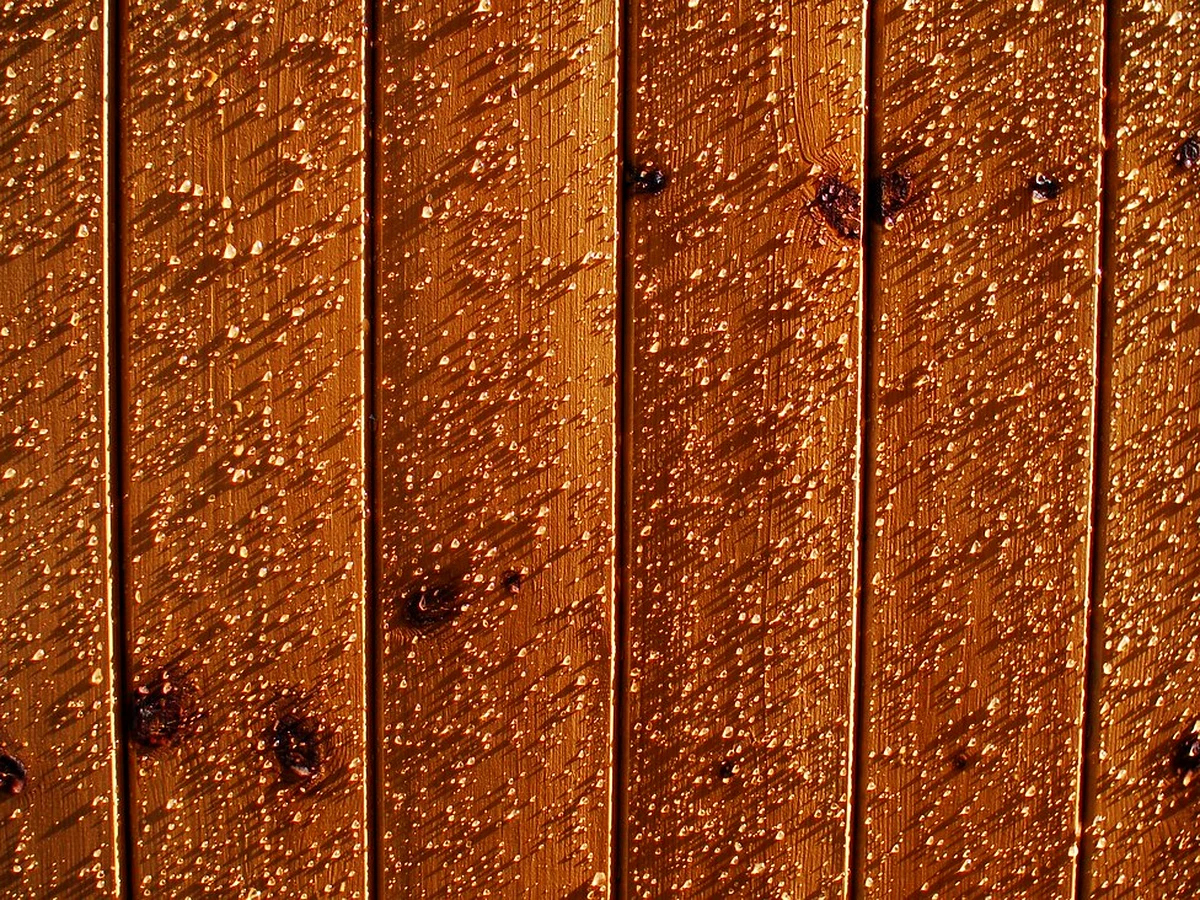
The reliable way to know is the water test: sprinkle water on the boards. If it soaks in and darkens the wood within a minute or two, the deck is ready. If it beads and sits on the surface, the wood is still too wet or too glazed to accept a finish, and you wait. That single test outranks every calendar rule you will read, because it measures the thing that actually matters.
Why Waiting Matters At All
Pressure-treated lumber is not simply sawn and shipped. It is loaded into a cylinder where preservative solution is forced deep into the wood fibre under pressure. That process leaves the boards saturated — often well above the moisture content the wood will settle at once it lives outdoors. A freshly delivered wet-treated board can be heavy enough that you feel the difference lifting it.
Stain, especially a penetrating oil-based finish, works by soaking into the wood and curing inside the fibre rather than forming a film on top. Wood that is already full of water has nowhere to put the stain. The finish sits on the surface, dries unevenly, and fails early — not because the product was poor, but because it was never allowed to do the one thing it is designed to do.
This is the same principle behind moisture-testing before any staining project, new deck or old. Wood needs to be dry before a finish goes on it, and dry is a measurement rather than an assumption.
The Water Test (Five Minutes)
Do this on a dry day, at least 48 hours after the last rain. Sprinkle a small amount of water — a quarter cup is plenty — on three different spots: a board in full sun, a board in shade, and an end-grain cut if one is reachable.
| What the water does | What it means | What to do |
|---|---|---|
| Soaks in within 1–2 minutes and darkens the wood | Dry enough, and the surface is open | Ready to clean and stain |
| Soaks in slowly, partial darkening after several minutes | Close — still holding moisture, or lightly glazed | Retest in 3–4 weeks, or clean and retest |
| Beads and sits on the surface | Too wet, or mill glaze is sealing the surface | Wait and retest; may need cleaning or light sanding |
Test several areas rather than one. Decks dry unevenly: a south-facing board over open air dries far faster than a shaded board tight to the house, or a stair tread sitting close to the ground. If most of the deck passes but a shaded corner does not, that corner is telling you the truth about the whole project.
On a professional job we confirm with a moisture meter as well, because the water test reads the surface while a meter reads what is happening inside the board. Wood at or below roughly 15 percent moisture content is in the right range for staining.
Wet-Treated vs Kiln-Dried Lumber
This is the single biggest reason two new decks need completely different waiting periods, and most homeowners are never told which one they have.
- Wet-treated (standard) lumber ships still saturated from the treatment cylinder. It is the most common and least expensive option, and it is what most deck builders use unless asked otherwise. It needs the longest wait — often a full season — and it shrinks and moves noticeably as it dries.
- Kiln-dried-after-treatment lumber goes back into a kiln after treatment to drive the moisture back out. It costs more, is more dimensionally stable, and can be ready for finish in weeks rather than months. It is worth asking your builder about before construction, not after.
If you do not know which you have, the water test answers it regardless. A deck built in May that is still beading water in September was almost certainly built from wet-treated stock.
Mill Glaze: The Hidden Problem
There is a second reason new wood rejects stain, and it has nothing to do with moisture. When boards are planed at the mill, the blades can burnish and compress the surface fibres, leaving a smooth, slightly glossy skin. That skin — mill glaze — seals the grain closed.
A glazed deck can be perfectly dry inside and still bead water, which is why the water test occasionally frustrates people who have waited patiently for months. The fix is not more waiting. It is opening the surface with a proper wood cleaner and brightener, and where necessary a light sanding, so the grain can accept the finish.
This is exactly why cleaning belongs to staining rather than sitting beside it as an optional extra. Even brand-new wood benefits: cleaning lifts mill glaze, construction dust, and handling marks, and it neutralizes the surface so stain penetrates evenly.
What Goes Wrong Too Early and Too Late
Both mistakes cost money, but they fail in different ways.
Staining too early produces a finish that never bonds. The symptoms are blotchy colour where some areas absorbed and others did not, a surface that stays tacky far longer than the product should take to cure, and early peeling or flaking — sometimes within the first season. Because the stain sits on top rather than inside, it also traps the remaining moisture in the wood, which is the opposite of what a finish should do. Correcting it means stripping a coating that never adhered properly to begin with.
Waiting too long is the more common error in the GTA, and it is quietly expensive. Unprotected wood takes UV damage through an Ontario summer, and the surface fibres break down and grey. Freeze-thaw cycling then drives water into the board and opens surface checking. By the second unprotected season, a deck that could have been cleaned and stained often needs sanding to remove the degraded grey layer first — turning a straightforward staining job into a restoration.
The sweet spot is to stain as soon as the wood passes the water test, and not to let a second winter pass unprotected. If your deck was finished late in the season and will not be ready before cold weather, the honest answer is to wait for spring. An early coat that fails is worse than one unprotected winter.
Timing a New Deck in the GTA
Local conditions move the timeline more than most homeowners expect. Newer subdivisions across Erin Mills, Churchill Meadows, Springdale, and Cornell tend to have wide-open lots with strong sun and good airflow, and decks there dry relatively fast. A shaded deck on a mature-canopy lot in Lorne Park, South Richvale, or the older parts of Markham can hold moisture for months longer in the same summer.
For a deck built in spring, the practical approach is to test in late summer and plan to stain in the late-summer or early-autumn window, when the wood has had a full warm season to dry and temperatures are still workable. For a deck built in mid or late summer, testing the following spring is usually more realistic than trying to squeeze a coat in before the cold arrives. Our guide to the best time and temperature to stain a deck in the GTA covers the weather side of that decision in detail.
One more thing worth knowing: the first finish sets the maintenance cycle for the life of the deck. A penetrating semi-transparent stain applied properly to new wood needs recoating on a predictable schedule rather than a full strip, which is the cheapest way to own a deck long-term. We break that math down in how often to restain a deck in Toronto.
If you are not sure whether your new deck is ready, we provide free on-site assessments across Toronto and the GTA — we moisture-test the wood and tell you plainly whether to proceed or wait. Every staining and refinishing project uses contractor-grade Expert Stain & Seal product and carries our 3-year written warranty.
Frequently Asked Questions
How long should I wait to stain a new pressure-treated deck?
There is no single correct waiting period. Most new pressure-treated decks are ready somewhere between one and six months after construction, depending on whether the lumber was wet-treated or kiln-dried after treatment, how much sun and airflow the deck gets, and the season. Use the water test rather than the calendar: sprinkle water on the boards, and if it soaks in and darkens the wood within a minute or two, the deck is ready to clean and stain. If it beads on the surface, wait and retest in a few weeks.
Can I stain a brand-new deck right away?
Only if the lumber was kiln-dried after treatment and it passes the water test. Standard wet-treated lumber ships saturated with preservative solution and cannot absorb stain until it dries out. Staining over wet wood produces blotchy colour, a finish that stays tacky, and early peeling, because the stain sits on the surface instead of penetrating the fibre. It also traps moisture inside the board.
Why does water still bead on my new deck after months of waiting?
That is usually mill glaze rather than moisture. When boards are planed at the mill, the blades can burnish the surface fibres closed, leaving a smooth, slightly glossy skin that repels water even when the wood underneath is perfectly dry. More waiting will not fix it. The surface needs to be opened with a proper wood cleaner and brightener, and sometimes a light sanding, before it will accept stain.
Is it bad to leave a new deck unstained for a year?
It is not ideal. Unprotected wood takes UV damage that breaks down the surface fibres and turns them grey, and Ontario freeze-thaw cycling drives moisture into the boards and opens surface checking. After a second unprotected season, a deck that could simply have been cleaned and stained often needs sanding to remove the degraded grey layer first, which turns a straightforward staining job into a more expensive restoration.
Does a new deck need to be cleaned before the first coat of stain?
Yes. Even brand-new wood carries mill glaze from the planing process, construction dust, handling marks, and often a few months of outdoor grime. A wood cleaner and brightener removes all of that, opens the grain so stain penetrates evenly, and neutralizes the surface pH. Skipping this step is one of the most common reasons a first coat looks blotchy or fails early.
Get Your Free Quote
Tell us about your project — we get back within 1 business day with honest pricing.