
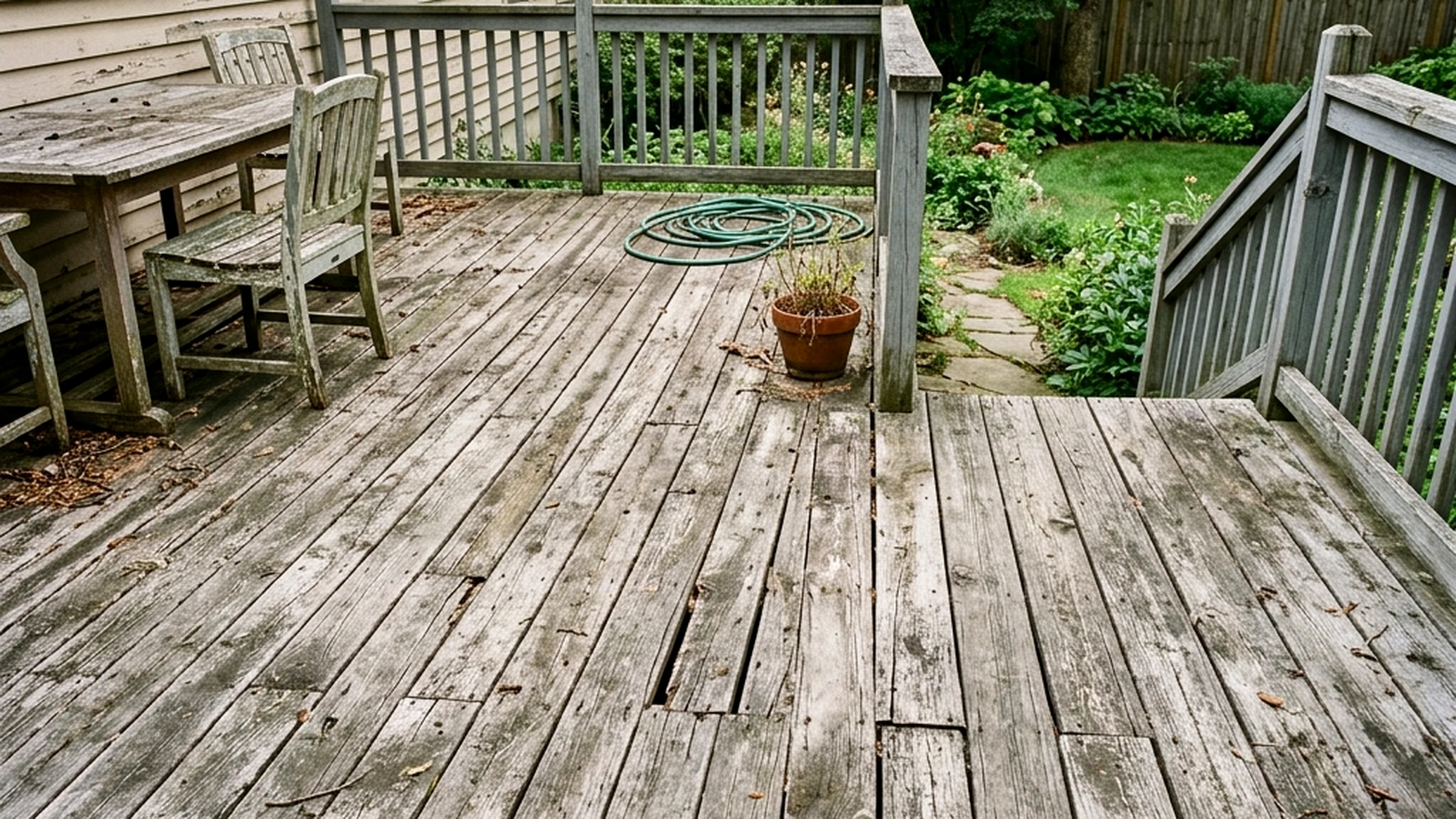
Richmond Hill is one of the few municipalities in the GTA where the correct deck restoration approach genuinely changes depending on your postal code. In the established south end — South Richvale, Mill Pond, the mature Bayview corridor — heavy tree canopy keeps decks damp, slows evaporation, and turns cedar into a hospitable surface for algae and mildew. Twelve kilometres north in Oak Ridges and Jefferson, decks sit high on the Oak Ridges Moraine on open lots, taking direct sun all day and the sharpest freeze-thaw swings in the region. Same town, same products on the shelf, opposite failure modes. This guide explains how to tell which micro-climate your deck is in and what each one actually needs.
Quick Answer: Richmond Hill Has Two Micro-Climates
If your deck sits under mature canopy in the south end of Richmond Hill, your enemy is trapped moisture, and the treatment centres on killing biological growth at the root, brightening the wood, and using a finish fortified against mildew. If your deck sits on an open lot in Oak Ridges or Jefferson, your enemy is UV and thermal movement, and the treatment centres on pigment load, UV blockers, and a finish flexible enough to move with the wood instead of cracking over it.
Applying the shaded-lot recipe to a moraine deck leaves it under-protected against sun. Applying the sun recipe to a shaded lot puts a good finish over live algae. Both fail early, and both failures get blamed on the product.
The Shaded South End
South Richvale, Mill Pond, and the older streets along Bayview have the tree cover that makes them desirable to live on and difficult to keep wood on. Dense canopy does three things to a deck at once: it blocks the direct sun that would otherwise dry the boards after rain, it drops a steady supply of leaves, seeds, and organic debris that hold moisture against the surface, and it keeps humidity high in the space beneath the deck.
The result is a surface that stays damp for hours or days longer than an open deck after the same rainfall. Algae colonizes that surface readily — the green film that turns slick and genuinely hazardous when wet — and mildew follows into the grain. Tannin bleed from overhanging trees adds dark staining on top.
What matters here is that this is a biological problem before it is a finish problem. Pressure washing removes what is on the surface but leaves the organisms rooted in the grain, which is why a deck can look clean on Saturday and green again within weeks. The step that actually works is chemical: a wood-safe cleaner that kills growth at the root, followed by a brightener that restores the wood pH so a finish will bond. Only then does the stain go on, and on a shaded lot that stain should carry a mildewcide.
The Exposed Moraine
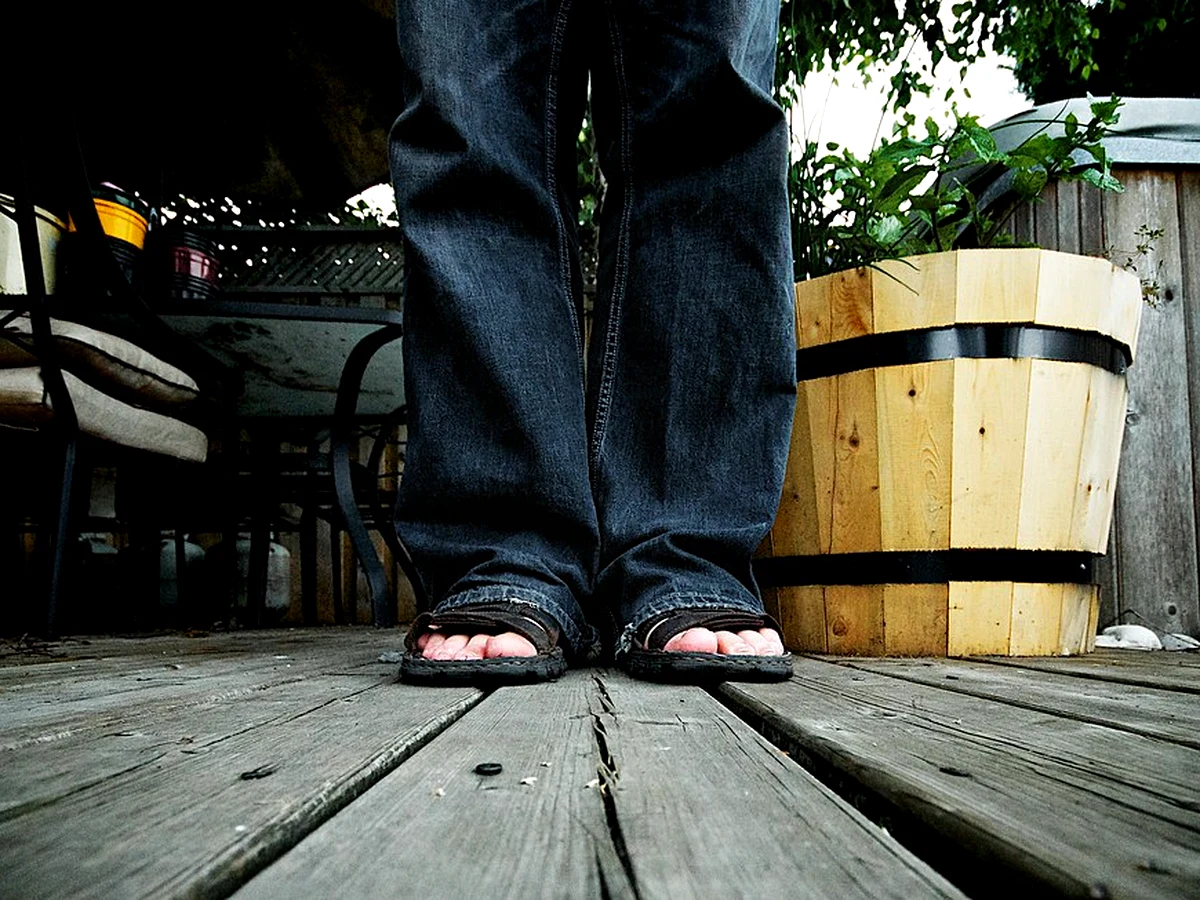
Oak Ridges and Jefferson sit on the Oak Ridges Moraine, the elevated ridge of glacial deposit running east to west across York Region. Decks up here are typically on newer, more open lots with little mature canopy, and the elevation gives them wider temperature swings than the sheltered south end sees.
That combination attacks wood differently. UV radiation breaks down lignin — the compound that binds wood fibres together — and once the surface layer degrades it greys, roughens, and loses its ability to hold a finish. Meanwhile the daily and seasonal temperature swings expand and contract the boards continuously, and each cycle stresses whatever coating is on them. The visible outcome is surface checking: fine cracks running along the grain that open on hot days and take on water when it rains.
The wrong response is a rigid, film-forming coating, because a film that cannot move with a board that is moving will crack and then peel. The right response is a penetrating finish with a high pigment load. Pigment is the actual UV shield — it is why a deeply coloured stain lasts materially longer in full sun than a clear or lightly tinted one. We cover that trade-off in detail in penetrating versus film-forming finishes.
Which One Is My Deck?
Location is a good first guess but not the deciding factor — a north-facing deck tucked behind a two-storey house in Jefferson can behave like a shaded lot, and a south-facing deck on a corner lot in South Richvale can take more sun than its neighbours. Read the deck rather than the address:
- Green or black film, slick when wet, worse on the north side, debris collecting in corners — you have the moisture problem.
- Uniform silver-grey fading, fine cracks along the grain, colour loss strongest where the sun tracks longest — you have the UV problem.
- Both, in different areas — common on larger or multi-level decks, and it means the deck should be treated in zones rather than uniformly.
The simple test for how much sun you actually get is to check the deck three times on a clear day — mid-morning, midday, and late afternoon — and note how much of it is in direct sun each time. Under about four hours total puts you firmly in shaded-lot territory.
Treatment Comparison
| Shaded (South Richvale, Mill Pond) | Exposed (Oak Ridges, Jefferson) | |
|---|---|---|
| Primary threat | Algae, mildew, trapped moisture | UV degradation, freeze-thaw checking |
| Visible symptom | Green or black film, slick surface, dark staining | Silver-grey fade, fine cracking along grain |
| Critical prep step | Biocide clean and brighten to kill growth at the root | Sanding out degraded grey fibre before coating |
| Finish priority | Mildewcide-fortified, breathable | High pigment load, UV blockers, flexible |
| Maintenance cadence | Annual cleaning matters more than frequent recoats | Recoat on schedule; sun shortens the interval |
Timing Work in Richmond Hill
Shaded lots need more patience on scheduling. Wood under canopy takes noticeably longer to reach a safe moisture level after rain, so a shaded South Richvale deck may not be ready to coat when an open Oak Ridges deck across town already is. We moisture-test before staining rather than working to a fixed number of dry days, because the canopy makes the calendar unreliable.
On the moraine, the constraint is temperature rather than moisture. Elevation means cooler overnight lows in spring and autumn, and coatings need the surface to stay within their working range while curing — not just at the moment of application. That tends to compress the workable season slightly at both ends compared to downtown Toronto. Our guide to timing and temperature in the GTA covers the specifics.
What It Costs
Richmond Hill deck staining runs $3 to $6 per square foot, the same range as the rest of the GTA. Where the two micro-climates diverge is prep. A standard 300 to 400 square foot cedar deck runs roughly $1,500 to $2,700; a 500 to 700 square foot deck with railings and a staircase runs $2,900 to $5,400; and a multi-level deck with full railings runs $5,000 to $9,500.
Heavy algae remediation on a deeply shaded lot adds cleaning and brightening labour. Sanding out UV-degraded grey fibre on a sun-punished moraine deck adds prep time of a different kind. Stripping a failed solid stain adds $1,500 to $4,000 depending on size. Quotes well below these ranges generally mean one coat instead of two, hardware-store product, or the prep step that your particular micro-climate most needs being skipped — which is precisely where finishes fail here.
We provide free on-site assessments across Richmond Hill rather than quoting over the phone, because the shade-versus-sun question genuinely changes the specification. Every staining and refinishing project uses contractor-grade Expert Stain & Seal product, is brushed and back-rolled, gets two coats minimum on horizontal surfaces, and carries our 3-year written warranty.
Frequently Asked Questions
Why does my Richmond Hill deck keep turning green?
Mature tree canopy in areas like South Richvale, Mill Pond, and the Bayview corridor blocks the sun that would dry your boards after rain, and drops leaves and organic debris that hold moisture against the surface. Algae colonizes that persistently damp wood. Pressure washing alone removes only what is on the surface and leaves the organisms rooted in the grain, which is why it returns within weeks. The fix is a wood-safe cleaner that kills growth at the root, a brightener to restore the wood pH, and a stain fortified with mildewcide.
Do Oak Ridges decks need different stain than the rest of Richmond Hill?
Yes, in practice. Oak Ridges and Jefferson sit on the elevated Oak Ridges Moraine on generally open lots, so decks there take direct sun all day and wider temperature swings. That calls for a high pigment load and UV blockers, since pigment is what actually shields wood from UV, and a penetrating finish flexible enough to move with the boards rather than a rigid film that will crack and peel. Shaded south-end decks need the opposite emphasis: mildewcide and biocide prep rather than maximum UV protection.
How much does deck staining cost in Richmond Hill?
Richmond Hill deck staining runs $3 to $6 per square foot. A standard 300 to 400 square foot cedar deck runs roughly $1,500 to $2,700, a 500 to 700 square foot deck with railings and a staircase runs $2,900 to $5,400, and a multi-level deck with full railings runs $5,000 to $9,500. Heavy algae remediation on a shaded lot or sanding out sun-degraded fibre on an exposed one adds prep, and stripping a failed solid stain adds $1,500 to $4,000. All quotes are free and done on site.
How do I know whether my deck is a shaded lot or a sun lot?
Check the deck three times on a clear day — mid-morning, midday, and late afternoon — and note how much is in direct sun each time. Less than about four hours of total direct sun puts you in shaded-lot territory. The damage pattern confirms it: green or black film that is slick when wet and worst on the north side means moisture, while uniform silver-grey fading with fine cracks along the grain means UV. Larger decks sometimes show both and are best treated in zones.
Is algae on a deck actually dangerous?
It is a genuine slip hazard. The green film that forms on persistently damp shaded decks becomes extremely slippery when wet, which matters most on stairs and on the path between a door and the steps. It also holds moisture against the wood, which accelerates the breakdown of both the finish and the fibre underneath. On shaded Richmond Hill lots, an annual cleaning is usually more valuable than more frequent recoating.
Get Your Free Quote
Tell us about your project — we get back within 1 business day with honest pricing.